If you have ever walked into a building and felt comfortable lights working, air flowing, water running that experience did not happen by accident. The MEP engineering team created this outcome through their engineering work.
The acronym MEP represents the three core systems, which include mechanical operations together with electrical systems and plumbing infrastructure. These three disciplines form the backbone of every functional building. A building exists only as concrete and walls when MEP systems are absent from its design. The space transforms into a secure environment that enables people to coexist while performing their work and receiving medical care and educational instruction.
This guide breaks down exactly what MEP engineering is, how the design process works, what goes wrong when teams skip proper coordination, and why choosing the right MEP partner matters more than most project stakeholders realize.
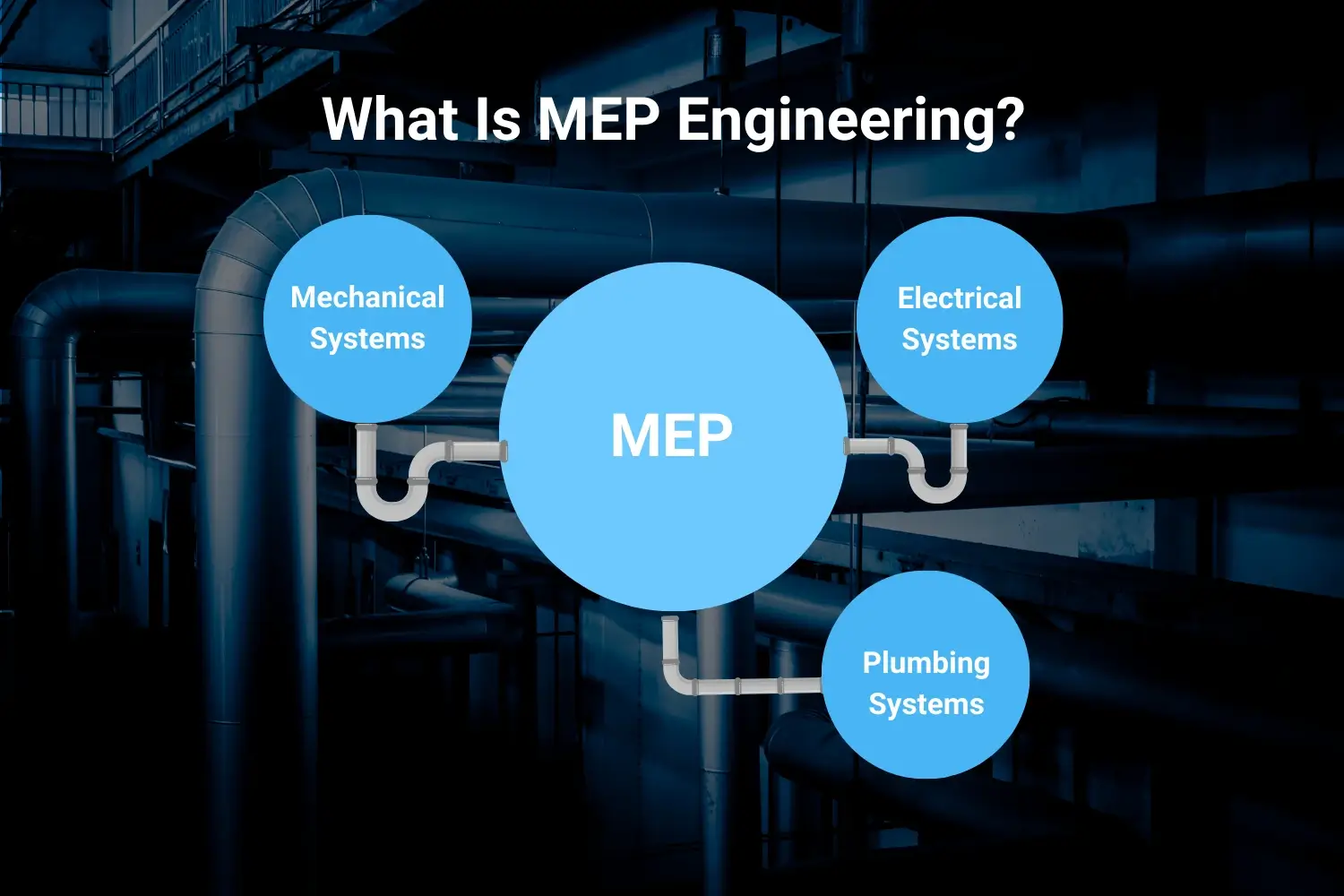
What Does MEP Stand For?
The core engineering disciplines that operate under the MEP acronym consist of Mechanical systems, Electrical systems, and Plumbing systems that create and operate building infrastructure systems. The systems operate together to manage these elements:
- Heating, cooling, and ventilation
- Electrical power distribution and lighting
- Water supply, drainage, and fire protection
MEP systems work together to create buildings that protect occupants while providing comfort and saving energy, and meeting all building code requirements. The equipment requires major room inside walls and ceilings, floor spaces, and mechanical areas, which makes it essential for architects, contractors, and developers to understand these systems from the start of each project.
What Do MEP Engineers Actually Do?
MEP engineers handle the entire process of building systems design and implementation by creating initial plans, which they follow until construction reaches its final stages. The team handles load calculations while they select appropriate equipment and generate construction documents that meet permit requirements, and they offer technical support to contractors working in the field.
The choices they make establish the performance of buildings while determining how much energy will be used and creating conditions for building comfort and making it easier to obtain regulatory approvals for projects.
Mechanical Engineering
Mechanical engineers dedicate their work maintaining building comfort while establishing environments which promote health and well-being. Their primary responsibility is designing HVAC systems heating, ventilation, and air conditioning that maintain the right temperature and air quality in every space.
The project requires engineers to choose boilers, chillers, air handlers, and pumps for equipment installation while they create ductwork systems with piping structures to deliver conditioned air and fluids across the building. Mechanical engineers develop building control programs and system specifications to optimize system performance while they monitor compliance with ASHRAE 90.1 energy standards and other applicable regulations.
Electrical Engineering
Electrical engineers manage everything powered or connected to a circuit. This includes:
- Power distribution: Service entries, switchgear, distribution panels, branch circuits, grounding, and lightning protection
- Lighting design: Layouts, fixture selection, and energy code compliance
- Low-voltage systems: Data cabling, telecommunications, fire alarms, security, and access control
- Emergency power: Backup systems, generators, and transfer switches
Key deliverables include single-line diagrams, panel schedules, load calculations, short-circuit studies, and lighting plans that meet local energy codes.
Plumbing Engineering
Plumbing engineers create water transportation systems that direct the building’s water supply through the building infrastructure until it exits the building structure. The system includes domestic water supply, hot water systems, drainage, stormwater management, and fire protection systems.
The team performs pipe network design work together with fixture selection water demand analysis, booster pump system development for tall buildings backflow prevention, and water treatment equipment specification. Healthcare facilities and laboratories require plumbing engineers to develop medical gas systems and specialty process piping systems for their operational needs.
Additional MEP Scope
Many MEP engineering firms extend beyond the core three disciplines. Common additional services include:
- Fire protection design: Sprinkler systems, standpipes, fire pumps, and specialty suppression systems
- Building automation and energy management systems
- Renewable energy coordination: Solar, battery storage, and EV charging infrastructure
- Vertical transportation coordination: Elevators and escalators
- Industrial process piping
When these services come from a single integrated team, coordination improves significantly, and the number of separate consultants on a project is reduced.
Common MEP Deliverables
The design and construction process of MEP engineering requires the creation of multiple documents and models, which cover all stages of the project. The deliverables function as operational guides that direct contractor efforts while also supporting permit approval and confirming that all systems operate at their intended performance levels.
The electrical deliverables consist of three main components, which include panel schedules, riser diagrams, load calculations, voltage drop calculations, and lighting layout designs.
The mechanical deliverables consist of three major components which include duct and pipe sizing schedules, nd equipment cut sheets, psychrometric analyses, and HVAC control sequences.
The plumbing deliverables consist of three main elements, which include fixture schedules, domestic water demand calculations, drainage sizing tables, and hot water system designs.
MEP engineers stay involved in construction through their work of answering contractor Rid their duties of checking shop drawings and submitted materials, their responsibility to monitor the sittee and their participation in commissioning activities.
The MEP Design Process: Step by Step
MEP design follows a structured progression that runs parallel to the architectural design process. Each phase builds on the last, moving from broad system concepts to fully detailed construction documents.
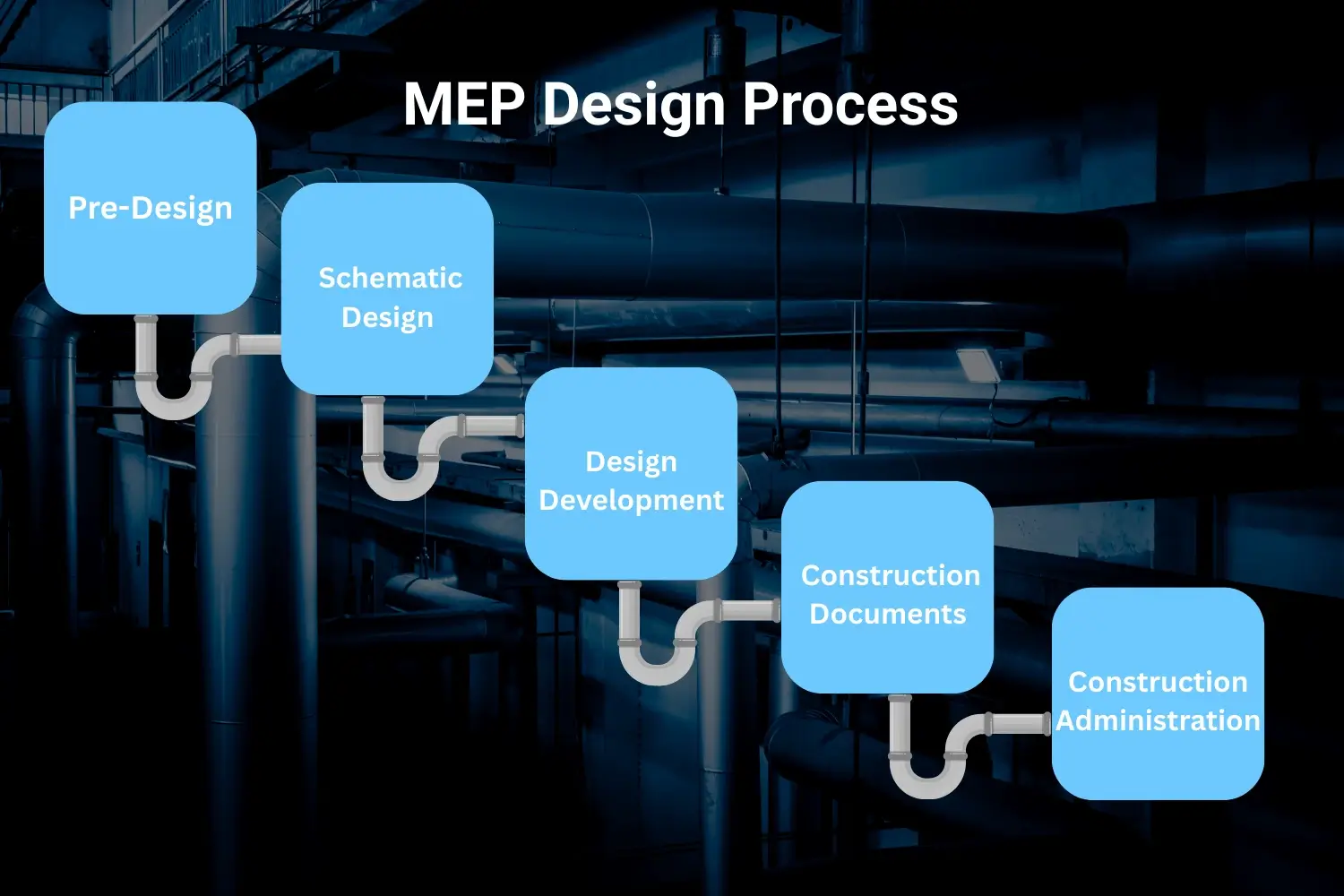
Step 1: Pre-Design
The design process begins with pre-design, which creates the fundamental base for all subsequent development work. The MEP engineering team begins their work by learning about the project targeted the owner’s specific needs, and the available financial resources. The team conducts a site assessment to determine current utility infrastructure, and they establish which codes they need to follow while they examine all environmental factors that would impact their system design.
The initial evaluation process demonstrates high-cost problems that would become more expensive to handle during later stages of development. The evaluation process shows that the site contains restricted areas for mechanical system installation, together with insufficient power supply capacity and challenging water drainage systems. The evaluation process includes engineers who assess ceiling heights and floor-to-floor distances, shaft positions, and room arrangements to verify that their space distribution plans remain practical.
The pre-design phase produces basic load assessments and first equipment dimensioning results and short design summaries, which help the team create a common understanding of their spatial organization work.
Step 2: Schematic Design
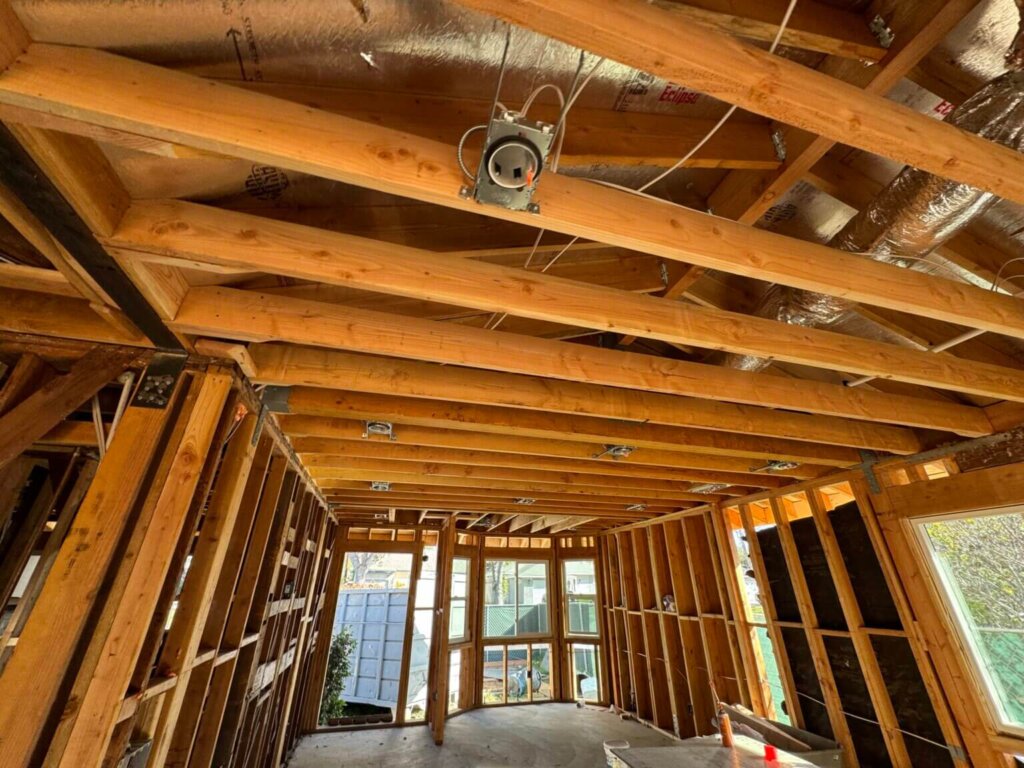
During schematic design, MEP engineers translate the project concept into preliminary system layouts and equipment placements. They create initial plans for electrical circuits, HVAC zones, and plumbing risers, and they begin coordinating system routes with structural framing and architectural features.
Key activities at this stage include:
- Mapping primary pathways for ductwork, piping, electrical feeders, and vertical risers
- Reviewing how systems pass through structural elements and ceiling cavities
- Performing preliminary sizing for equipment, ductwork, piping, and transformers
- Overlaying system layouts on architectural and structural drawings to identify spatial conflicts early
- Reserving adequate space in mechanical rooms, electrical rooms, and on rooftops for equipment and future maintenance access
Catching spatial conflicts during schematic design is far less costly than finding them during construction documents or in the field.
Step 3: Design Development
Design development takes the project from its initial layout stage to produce detailed plans that work as a combined system. The selection of equipment receives confirmation from engineers who also determine system operations and ensure that layouts match both architectural finishes and ceiling heights and structural requirements.
The process includes calculating all required heating and cooling loads, electrical system capacity, ventilation needs, and plumbing system demand. Engineers establish final dimensions for ducts and pipes, transformers, panels, and all other system components while they choose lighting solutions and establish control systems for HVAC, lighting, and fire alarms, and building automation systems.
The stage produces detailed drawings which show floor plans at scale with equipment positions, duct and pipe paths, diffuser locations, and electrical device placements that match ceiling plans and architectural elements. The design reaches its final stage of development when it becomes operationally ready, space-efficient, and ready for construction document development.
Step 4: Construction Documents
Construction documents are the complete, permit-ready package that contractors use to build the project. These include:
- Final drawings for all MEP systems with complete dimensions and notes
- Technical specifications defining material requirements, performance criteria, installation standards, testing procedures, and warranty terms
- Panel schedules, equipment schedules, and cut sheets
- Permit packages including energy compliance documentation, load calculations, egress lighting calculations, and fire alarm narratives
To support contractor coordination in congested areas, engineers also provide enlarged plans, cross-sections, and coordination diagrams showing how multiple trades install systems in shared spaces.
Step 5: Construction Administration
The process of MEP involvement continues past the point when drawings become available. The engineering team actively responds to design inquiries during construction while they assess contractor submissions, shop drawings, and perform site inspections to confirm that installations follow the documented plans.
Engineers must give rapid updates about their work when field situations depart from what the drawings display to stop any project delays. The team members help with system activation and testing procedures, and they perform air and water balancing operations and functional commissioning to verify system performance before building ownership transfer.
Why Early MEP Involvement Matters
One of the most consistent findings across commercial, multifamily, and institutional construction is this: the later MEP coordination begins, the more expensive problems become.

Fewer Field Conflicts
The schematic design process receives input from MEP engineers who direct system routes to avoid structural components before beam dimensions become permanent. Engineers need to verify ductwork and sprinkler piping installation space during ceiling height confirmation. The designers must forecast suitable locations for equipment servicing and maintenance operations.
BIM coordination models enable better teamwork between different teams through their improved coordination capabilities. The three-dimensional model shows how a duct system runs into a beam structure, while pipes block the path of conduits and sprinklers violate the recommended distance from light fixtures. The system shows conflicts that need no financial investment to solve. The process of resolving issues at the worksite demands physical resources and staff time, which results in schedule delays and generates extra costs through change orders.
Faster Permit Approvals
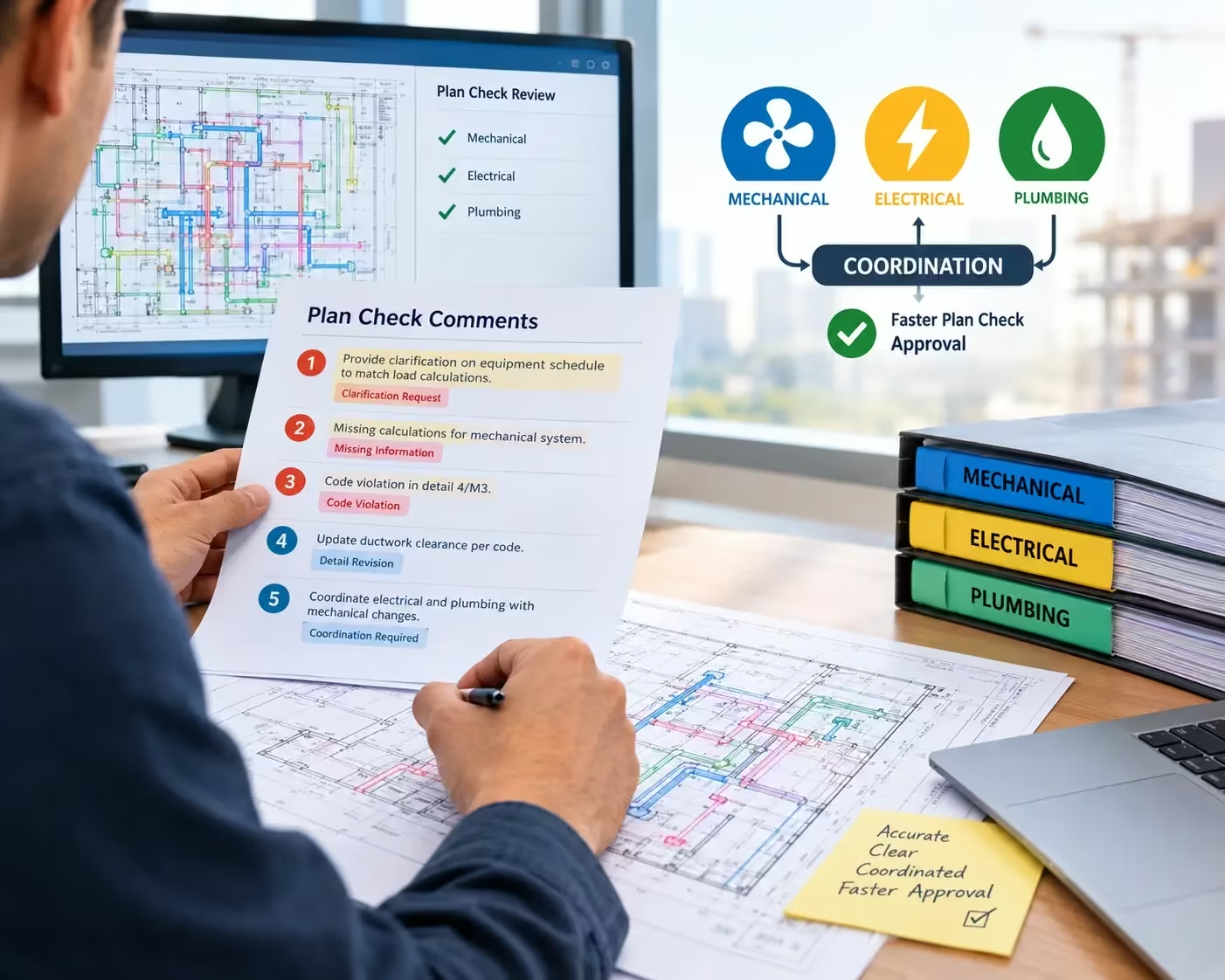
The permit application review process evaluates all submitted materials to determine if they fulfill the required criteria and comply with established building codes. The early involvement of MEP engineers allows them to create energy calculations, load analyses, and compliance documentation throughout the architectural design phase instead of producing them at the end of the design process.
The engineers who understand local permit requirements will predict which plan-check comments will appear during the review process so they can eliminate these issues before submitting their package. The process decreases the number of times projects must be resubmitted while it reduces the total review time and speeds up the start of construction work.
More Accurate Cost and Schedule Estimates
The initial MEP coordination process provides contractors with precise drawings and exact quantity information, which enables them to create accurate job pricing. The selection process for equipment needs to happen at the beginning because it lets construction teams start procurement activities which helps them avoid extended wait times that stall their building work. The process of creating fully coordinated documents helps organizations decrease their RFIs and field modifications, which result in higher labor expenses and extended project timelines.
A Real-World Example
The architectural design for a five-story podium apartment complex includes an 18-inch plenum space, which will sit above the corridor ceilings. The MEP engineer performs ventilation computations during schematic design while checking sprinkler system layout electrical conduit paths, and structural beam dimensions. The team determines that several corridor sections actually need 24 inches of vertical clearance.
The architect can make changes to floor-to-floor dimensions and structural system designs because they discovered this problem during the schematic design phase before the drawings progressed too far. The project would have faced two different scenarios, which would have caused design changes and permitted resubmissions and construction delays that would last for many weeks. The project achieved early involvement, which prevented a six-week delay and saved $75,000 from design changes and permit expenses.
Common MEP Mistakes That Drive Up Costs
Many projects experience identical problems that could have been prevented from occurring. Project teams need to spot these recurring patterns because they can stop them from appearing in their work.

The practice of waiting to start MEP coordination continues. The process of bringing MEP engineers into the project during design development or construction documentation phases leads to system installations in unplanned spaces that lack sufficient dimensions. The installation process produces system conflicts together with small equipment sizes, which force designers to repeat their work while the project experiences delayed approval from regulatory bodies.
The architectural plans for plenum space depth fall short of what actual commercial buildings require. Most commercial buildings need more than 12 to 18 inches of plenum space, which architects tend to plan for. The space requirements for corridors range between 24 and 36 inches, yet mechanical rooms need at least 48 inches to accommodate their ductwork piping, cable trays, sprinkler mains, and structural components with necessary space between them. The late discovery of this issue requires us to increase ceiling heights, while we must change our building layout and face delays in our planned schedule.
The process of checking building codes fails to identify local code changes that exist in addition to state codes. Standard building codes from national models form the base, which local government bodies modify through their own changes. Local regulations cause engineers to create building plans that authorities reject during plan reviews, so they must resubmit their work, which delays the project schedule by several weeks.
Assuming utility capacity without verification. Projects that begin with enough electrical service, as well as supply and water pressure, and sewer capacity, often discover they must perform system upgrades and build additional main lines after their start. The required solutions will extend the project timeline by several months, as they need major modifications to the existing design.
Skipping three-dimensional coordination. Two-dimensional drawings cannot show the true complexity inside ceilings and walls. The absence of a 3D coordination model prevents the detection of hidden conflicts until the installation process begins. The contractors must perform rework because they discovered that ducts, pipes conduits, and sprinkler lines all need to occupy the same area, which causes them to lose time and generate change orders.
Submitting incomplete construction documents. The dacinostat miss essential information, full schedules, and correct specifications lead to multiple requests for information. The process slows down as work progresses because of rising labor expenses, which damage the contractor’s trust in the design. Complete documents shorten feedback cycles and give contractors what they need to build the first time correctly.
How to Choose the Right MEP Engineering Firm
The MEP partner selection process determines how the project will progress from its initial design phase until the building reaches its final occupancy stage. Here is what to evaluate.
The system operates with full integration of multiple disciplines which work together as a single unit. Engineering companies that provide all services for mechanical, electrical, plumbing, structural, and civil engineering projects generate better synchronized documentation, which enables them to resolve conflicting issues at a faster rate. The design experience improves because different companies no longer need to exchange their work with each other.
Local permit experience. The building department approval process becomes more predictable when a company operates within your jurisdiction because they understand how codes get interpreted, what reviewers need to see, and which approval obstacles tend to happen. Request current client testimonials, which should include details about local construction projects and ask about how long it took to obtain necessary permits.
Strong BIM workflow. Modern MEP design requires three-dimensional modeling to establish spatial arrangements and detect system conflicts during the design process. The company needs to demonstrate that they use modern BIM software while actively participating in coordination sessions, which involve real-time model operations and their file delivery system should support contractor needs during building assembly.
The organization needs to have quick response abilities while maintaining excellent communication standards. MEP engineers need to maintain direct contact with the architected general contractors, and specialty consultants who participate in the project. Select a company that provides fast answers to your questions while actively joining design meetings and maintains straightforward communication channels.
Relevant project experience. Request case studies from organizations that handle buildings that resemble your property in terms of size and design complexity. A company that has already handled issues that resemble yours will offer tested solutions based on their proven experience instead of starting from zero on your assignment.
Construction-phase commitment. MEP support needs to continue after the drawings have been completed. The firm needs to review submittals while visiting the site, and they must respond to RFIs while supporting the commissioning process. The team members safeguard the design goals by continuing their work until the project reaches its official conclusion.
Frequently Asked Questions
What does MEP stand for in construction?
MEP stands for mechanical, electrical, and plumbing the three core engineering disciplines responsible for designing building systems, including HVAC, power distribution, lighting, water supply, drainage, and fire protection.
Is fire protection part of MEP?
Fire protection is typically included within MEP scope, either under the plumbing discipline or as a dedicated specialty, depending on the firm’s structure and the project’s requirements.
When should MEP engineers be brought onto a project?
MEP engineers should be involved during pre-design or early schematic design. Early involvement allows the team to identify spatial requirements, coordinate system routing, and avoid costly conflicts before the design is too far along to adjust easily.
What MEP documents are required for a building permit?
Common permit deliverables include construction drawings for all MEP systems, technical specifications, load calculations, panel schedules, equipment schedules, energy code compliance reports, and fire protection calculations.
How does BIM improve MEP coordination?
Building Information Modeling creates three-dimensional models that allow MEP engineers, architects, and structural engineers to visualize all building systems together and detect spatial conflicts before construction begins. This reduces field clashes, change orders, and rework.
What is the difference between MEP and HVAC?
HVAC heating, ventilation, and air conditioning is one component within the mechanical discipline, which is itself one of the three MEP disciplines. MEP encompasses a much broader scope, including electrical systems, plumbing, fire protection, and other building infrastructure.
Final Thoughts
MEP engineering serves as an essential operational function that operates at the core of every construction project. The decisions that MEP engineers make will determine how efficiently a building operates, how quickly it receives permits, and whether construction stays on track with its budget and schedule.
Project teams need to involve MEP engineers at the beginning of their work during pre-design and early schematic design phases because they should treat coordination as a continuous process that extends beyond its current position as a final evaluation step.
The combination of MEP systems with architectural and structural teams leads to more efficient project delivery because these teams start working together from the beginning, which produces better results for building owners and their occupants at reduced expenses.