
Professional HVAC Load Calculations for Accurate, Energy-Efficient System Design
Designing an HVAC system without proper load calculations is like building a house without a foundation. Our licensed mechanical engineers at YA Creative Design Partners perform exact HVAC load calculations for residential, commercial, and industrial buildings that span California, Texas, and Nevada. Our team employs ACCA Manual J methodology alongside top-tier engineering software to identify the precise heating and cooling requirements of your building, which removes all need for estimation while cutting down on energy consumption and maintaining consistent comfort throughout every season.
What Is an HVAC Load Calculation?
The engineering process of HVAC load calculation determines the exact quantity of heating and cooling power that buildings need to maintain their indoor temperature at a stable level during both summer and winter peak times.
The evaluation process, called thermal load calculation or building heat load analysis, assesses all elements that affect indoor temperature by examining building envelope components together with insulation performance and considering how many people occupy the space, how sunlight reaches the area, and what weather patterns occur in the area.
The result is a set of BTU values (British Thermal Units) that define:
- Heating load is the maximum rate of heat loss during the coldest design day
- Cooling load is the maximum rate of heat gain during the hottest design day
The technical basis for selecting appropriate HVAC equipment, designing ductwork systems, and calculating ventilation requirements stems from these values.
Engineers need precise HVAC load calculations to establish correct system dimensions for building thermal needs.
Why Do HVAC Load Calculations Matter for Your Building?
The wrong selection of HVAC equipment leads to a long-standing and expensive problem that affects mechanical system design. The U.S. Department of Energy has found through its research that most HVAC systems in operation are incorrectly sized, which results in poor comfort, high energy costs, and shorter equipment operational life.
Oversized HVAC Systems Cause:
- Short cycling the system turns on and off too frequently, wearing out components faster
- Poor humidity control causes the system to cool the air before it can remove moisture
- Higher installation and operating costs, larger equipment costs more to buy and run
- Uneven temperature distribution, some rooms overheat or overcool, while others remain uncomfortable
Undersized HVAC Systems Cause:
- Inability to meet peak demand, the system runs constantly on the hottest or coldest days, and still cannot reach the setpoint
- Overworked compressors and heat exchangers lead to accelerated wear and shortened equipment lifespan
- Reduced indoor air quality, insufficient airflow means poor ventilation and humidity buildup
- Tenant and occupant complaints persistent comfort issues that damage confidence in the mechanical system
Accurate heating and cooling load calculations protect your investment by ensuring the HVAC system is sized to deliver exactly what the building needs, no more, no less.
How Do Engineers Calculate HVAC Load?
Our mechanical engineers follow a structured, multi-step process to determine the total heat gain and heat loss for every zone and room in a building.
Step 1: Building Data Collection
We begin by reviewing architectural floor plans, room dimensions, ceiling heights, window schedules, door locations, and building orientation. This data forms the input framework for all subsequent calculations.
Step 2: Envelope Heat Transfer Analysis
Using the heat load formula Q = U × A × ΔT, our engineers calculate the rate of heat transfer through every element of the building envelope:
- Exterior walls and their insulation R-value
- Roof and attic assemblies
- Windows and glazing systems (including solar heat gain coefficient, or SHGC)
- Slab floors and below-grade construction
Step 3: Solar Heat Gain Calculation
Window orientation, glazing type, and local latitude directly affect how much solar radiation enters the building. Our engineers calculate solar heat gain for each window based on peak sun angles specific to your project location, whether that’s Irvine, CA, Houston, TX, or Las Vegas, NV.
Step 4: Internal Heat Load Analysis
Every occupant, light fixture, and piece of electrical equipment generates heat that adds to the cooling load. Our analysis accounts for:
- Occupancy density and metabolic heat output
- Lighting heat generation (LED, fluorescent, or high-bay fixtures)
- Office equipment, servers, kitchen appliances, and process machinery
- Infiltration and exfiltration airflows
Step 5: Ventilation and Outdoor Air Requirements
Mechanical ventilation brings outdoor air into the building for air quality purposes, but that air must also be conditioned. Our engineers calculate ventilation airflow requirements per ASHRAE 62.1 standards to ensure both air quality compliance and accurate load accounting.
Step 6: Room-by-Room and Block Load Summary
The final output is a complete room-by-room heat load calculation that shows the heating and cooling demand for every individual space, plus a block load summary for total system sizing. This data directly informs equipment selection, duct sizing, and air distribution design.
What Is Manual J and Why Is It the Industry Standard?
Manual J is the ACCA (Air Conditioning Contractors of America) residential load calculation standard, and it is the most widely recognized method for sizing HVAC equipment in homes and low-rise residential buildings.
Unlike the outdated “square footage rule of thumb,” Manual J accounts for:
- Climate zone and outdoor design temperatures
- Building orientation and window-to-wall ratios
- Insulation levels in walls, ceilings, and floors
- Air leakage and infiltration rates
- Internal heat gains from occupants and appliances
- Room-by-room airflow distribution
Our engineering team for residential projects completes Manual J assessments which follow California’s Title 24 and Texas IECC and Nevada energy code standards to guarantee your permit documents will pass AHJ approval on their first review.
Our team uses Manual N commercial load calculation and ASHRAE Handbook of Fundamentals methods to handle large industrial and commercial projects which demand complex system management for multiple zones and process loads and occupancy profiles.
What Buildings Do We Perform HVAC Load Calculations For?
Our engineering team handles load calculations across a wide range of project types and building classifications.
Residential Buildings
For single-family homes, ADUs, townhomes, and multi-family developments, we perform residential HVAC load calculations using the Manual J methodology. Our residential analysis covers:
- Whole-house block load for equipment selection
- Room-by-room analysis for duct and diffuser sizing
- Heating load calculation for furnace or heat pump sizing
- Cooling load calculation for air conditioner or chiller sizing
- Title 24 compliance support for California projects
Commercial Buildings
Office buildings, retail centers, schools, medical clinics, and mixed-use developments require more complex thermal analysis due to variable occupancy, high plug loads, and strict ventilation requirements. Our commercial load calculations include:
- Multi-zone VAV and fan coil unit sizing
- Lighting and equipment heat load analysis
- Outdoor air and exhaust ventilation calculations per ASHRAE 62.1
- LEED and energy compliance documentation support
Industrial Facilities
Warehouses, manufacturing plants, food processing facilities, and data centers often have unique process loads that conventional HVAC sizing tools cannot adequately model. Our industrial load calculations address:
- Process equipment heat rejection
- High-bay ventilation and makeup air requirements
- Exhaust and pressurization analysis
- Specialty cooling for server rooms and clean rooms
What Software and Tools Do We Use for Load Calculations?
Professional HVAC load calculations require more than a basic online BTU calculator or a simple spreadsheet. Our engineers use industry-recognized HVAC load calculation software and engineering analysis programs, including:
- HVAC-Calc for Manual J residential and light commercial load analysis
- Carrier HAP (Hourly Analysis Program) for detailed hourly energy simulation and commercial system sizing
- Trane TRACE 3D Plus for whole-building energy modeling and compliance documentation
- ACCA-approved Manual J software for permit-ready residential load reports
These tools allow our engineers to model real-world building performance across thousands of hourly data points, producing results that are far more accurate than any rule-of-thumb estimate or generic home heating load calculator can provide.
How Does HVAC Load Calculation Support Energy Code Compliance?
Accurate load calculations are not just good engineering practice in many jurisdictions; they are a code requirement.
California Title 24 Energy Compliance
The Title 24 energy compliance process requires all California projects to produce verified documentation which proves their HVAC system sizing. Our load calculation reports present fundamental data which CF1R and CF2R compliance forms use to verify that equipment capacity meets the building’s calculated heating and cooling requirements.
IECC (International Energy Conservation Code)
The present version of IECC requires all Texas and Nevada and other U.S. states to enforce its rules for commercial and residential building projects. The load calculation process shows that HVAC equipment sizes stay within the code-allowed range which plan check authorities now use as their standard.
ASHRAE 90.1 Commercial Buildings
For commercial projects subject to ASHRAE 90.1, our load calculations feed directly into the equipment efficiency and sizing compliance pathway, supporting mechanical permit submittals and third-party energy reviews.
What Deliverables Will I Receive?
When you engage YA Creative Design Partners for HVAC load calculation services, you receive a complete engineering package ready for use in mechanical design and permit submittal:
- Detailed HVAC load calculation report, room-by-room heating and cooling loads, with all input assumptions documented
- Block load summary: total building heating and cooling demand for equipment selection
- Equipment capacity recommendations suggested tonnage, BTU ratings, and system type based on load results
- Ventilation airflow schedule, outdoor air requirements per room, and per system
- Compliance documentation Title 24, IECC, or ASHRAE 90.1 support as applicable
- Coordination notes load data formatted for integration with our Duct & Equipment Sizing and MEP Drawing services
All reports are signed and stamped by a licensed Professional Engineer (PE), providing the engineering authority required for permit submission in California, Texas, and Nevada.
How Long Does an HVAC Load Calculation Take?
Turnaround time depends on project size and complexity:
Project Type | Typical Turnaround |
Single-family residence (Manual J) | 2–3 business days |
Multi-family or townhome project | 3–5 business days |
Small commercial building (< 10,000 sf) | 3–5 business days |
Large commercial or mixed-use | 5–10 business days |
Industrial facility with process loads | 7–14 business days |
For time-sensitive projects, we offer expedited delivery options. Contact our team to discuss your project schedule.
Who Performs the HVAC Load Calculations?
Every load calculation at YA Creative Design Partners receives oversight from licensed mechanical engineers who possess residential and commercial and industrial HVAC design experience. Our team operates from Irvine California while we maintain current PE licenses which cover California and Texas and Nevada.
Our engineering work remains fully in-house because we do not buy outside services nor do we trust automated software results without proper verification. The company performs verification on all calculations to check their correctness and their complete nature and their adherence to established codes before delivering them to clients.
What Does an HVAC Load Calculation Cost?
Pricing varies depending on building type, size, and scope of work. We offer competitive rates for:
- Standalone Manual J reports for residential permit submittals
- Full mechanical design packages that include load calculations, duct sizing, and equipment schedules
- Retrofit load analysis for existing buildings undergoing system upgrades
Contact us for a free consultation and project-specific quote. Most clients receive a fee proposal within one business day.
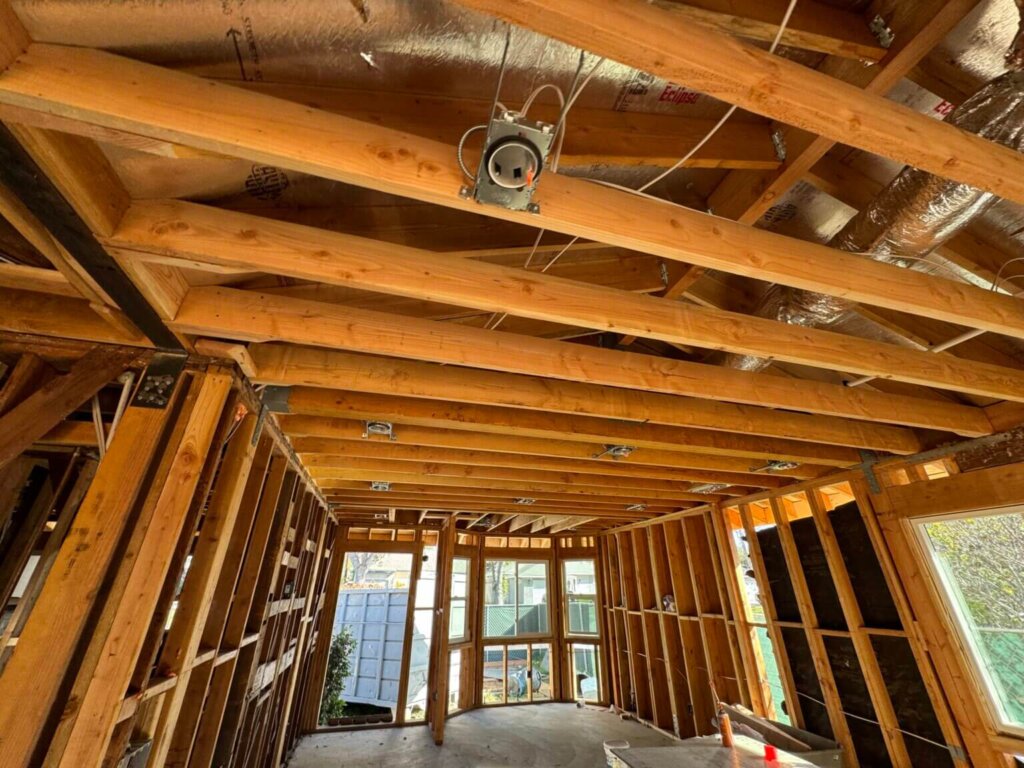
Learn More
Find more information on how we can assist you with your next
construction project, or get inspired by some of our recent projects!
Testimonials
Frequently Asked Questions About HVAC Load Calculations
The heating load represents the maximum rate at which heat escapes from a building during the coldest outdoor conditions, which determines how powerful your furnace, boiler, or heat pump needs to be. The cooling load represents the maximum rate at which heat enters a building on the hottest day, which determines the required capacity of your air conditioner or chiller. The calculation process needs different values because each value stems from separate physical processes which take place during distinct seasons.
Manual J serves as the ACCA standard which specifies procedures for calculating residential HVAC loads. The analysis method evaluates each room separately while it considers insulation protection and window dimensions and direction and air leakage and people presence and weather conditions in the area to calculate the actual heating and cooling demands for every room in a house. Most jurisdictions in the U.S. require or recommend Manual J for residential HVAC permit submittals.
Online BTU calculators and rule-of-thumb estimators provide basic estimates through their 400–600 sf per ton guideline but they fail to replace the need for expert load assessments. These systems fail to address essential elements which include insulation standards and window protection systems and air leakage numbers and building warmth production and local thermal requirements. The system sizing process based on these tools leads to equipment selection that exceeds proper dimensions or falls below required dimensions.
Yes, an oversized air conditioner unit will drop the room temperature rapidly which causes its shutdown before it completes the full dehumidification process. The system generates an indoor environment which maintains cool temperatures but produces damp conditions that create mold growth potential and deteriorate air quality. The system operates through successive short-cycle repetitions which lead to faster compressor degradation and higher service expenses.
In California, a load calculation (or evidence of compliance with Title 24 equipment sizing requirements) is typically required as part of the mechanical permit package. The submission of a documented Manual J or commercial load calculation becomes essential in Texas and Nevada because it enables designers to minimize their chances of receiving plan check corrections during the review process.
A block load provides a single calculation which shows the entire building or system heating and cooling needs to help engineers select their main equipment. A room-by-room calculation determines the load for each space, which is essential for properly sizing supply air outlets, duct branches, and zone controls. A complete HVAC design requires both.
Request a Free Consultation for HVAC Load Calculation Services
If you are planning a construction project and need accurate HVAC load calculations, our team is ready to assist.
We provide expert mechanical engineering analysis to ensure your project receives properly sized, energy-efficient, and permit-ready HVAC system designs.
Contact YA Creative Design Partners today to schedule a free consultation and discuss your project requirements.