

Homeowners who wish to make wise choices regarding comfort, energy consumption, and upkeep must comprehend how a water heater operates. In daily life, hot water is essential for everything from cooking and showering to cleaning and laundry.
This manual provides concise, useful explanations of the procedure. With an informational and impartial focus for a U.S.-based audience, it covers common system types, essential components, heating cycles, safety features, and efficiency considerations.
Purpose of a Water Heater
The purpose of a water heater is to heat cold water and deliver or store it at a constant temperature. When faucets or appliances require hot water, the system makes sure it is available.
Fundamentally, a water heater works by heating water, regulating its temperature, and safely distributing it throughout the house.
Main Types of Residential Water Heaters
While designs vary, most homes rely on one of several common systems. Each type follows the same basic principle but uses different methods.
Water Heaters in Storage Tanks
In American homes, this is the most popular choice.
An insulated tank holds heated water that is always available for use. The heating cycle is repeated when hot water exits the tank and is replaced by cold water.
Water Heaters Without Tanks
Water is heated on demand by tankless systems.
The device instantly heats water as it passes through the system rather than storing hot water. By eliminating the storage step, this method modifies the way a water heater operates.
Water Heaters with Heat Pumps
Instead of producing heat directly, these systems heat water by using the ambient air.
Although they rely on the surrounding temperature, they are frequently more energy-efficient.
Water Heaters with Solar Power
Water can be fully or partially heated by solar systems using sunlight.
To guarantee reliable operation during times of low sunlight, they are frequently combined with a backup heater.
Key Components Inside a Water Heater
To fully understand how does a water heater work, it helps to know the internal parts that make the system function.
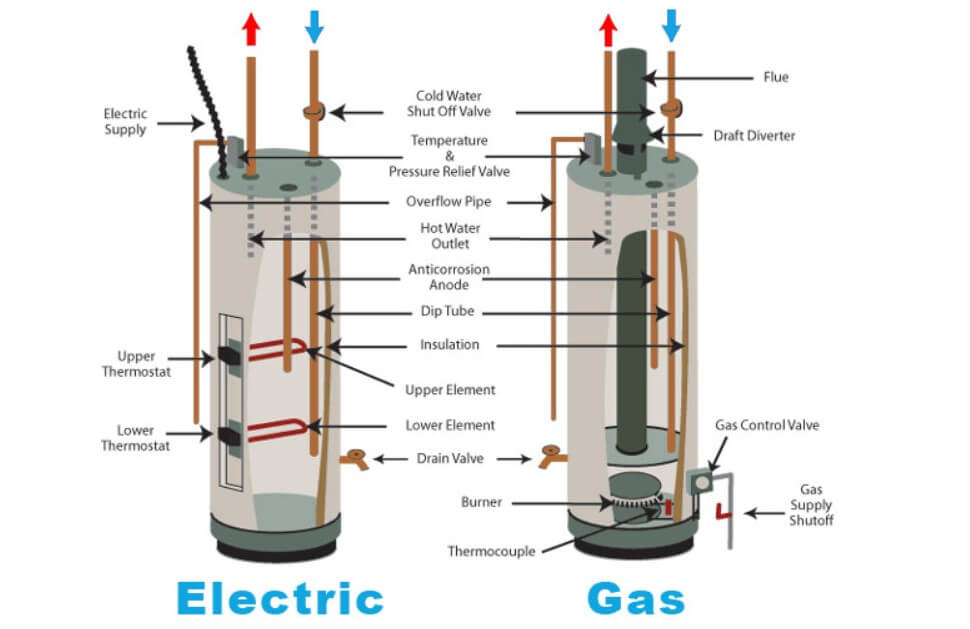
Burner or Heating Element
Heating components are located inside the tank of electric models.
Gas models heat water from below using a burner that is situated beneath the tank.
The thermostat
The water temperature is controlled by the thermostat.
When water cools below a predetermined level, it starts the heating process; once the desired temperature is reached, it turns off.
The Dip Tube
The dip tube allows cold water to enter the tank.
Incoming water is directed by this tube to the bottom of the tank, where it can be effectively heated.
Rod Anode
The tank is shielded from corrosion by the anode rod.
By drawing in minerals and corrosive substances, it helps the water heater last longer.
Valve for Pressure Relief
Excess pressure is released by this safety feature.
If the temperature or pressure increases above safe limits, it keeps the tank from failing.
Step-by-Step: How a Traditional Water Heater Works
The basic heating cycle explains how does a water heater work in everyday use.
- Cold water enters the tank through the dip tube
- The heating element or burner warms the water
- Hot water rises to the top of the tank
- Hot water exits through the outlet pipe when a faucet opens
- Cold water refills the tank and reheating begins
This continuous cycle ensures hot water is available throughout the day.
How Temperature Is Controlled
One essential function is controlling the temperature.
The temperature range for the majority of residential systems is 120°F to 140°F. This range balances comfort, energy efficiency, and safety.
The thermostat alerts the heating system to turn on if the water cools below the predetermined temperature. Heating automatically stops when the desired temperature is reached.
How Tankless Water Heaters Work Differently
With tankless systems, the answer to the question of how a water heater operates is somewhat different.
These units heat water as it passes through powerful heating elements rather than storing it. Although flow rate affects output, hot water is nearly instantly available.
Standby heat loss, which happens when stored water cools over time, is eliminated by tankless systems.
Energy Sources Used by Water Heaters
Water heaters rely on different energy sources depending on design and availability.
Common energy options include:
- Electricity
- Natural gas
- Propane
- Solar energy
Each energy source affects operating costs, efficiency, and installation requirements.
Recovery Rate and Hot Water Supply
The speed at which a water heater can reheat water after it has been used is known as its recovery rate.
Reduced wait times between showers or appliance use result from a higher recovery rate. Recovery performance is influenced by the size of the tank, the energy source, and the heating technique.
Knowing this idea makes it easier to understand how a water heater operates during times of high demand.
Why Insulation Matters
Water temperature is maintained with the aid of insulation.
To prevent heat loss, storage tanks are covered with insulation. Systems with adequate insulation use less energy to keep water hot, increasing productivity and reducing operating expenses.
Safety Features Built Into Water Heaters
Modern water heaters include several built-in safety mechanisms.
These features protect both the appliance and household occupants from risk.
Key safety components include:
- Temperature and pressure relief valves
- Automatic shutoff controls
- Thermostat regulation
- Venting systems for gas models
Together, these features ensure reliable and safe operation.
Common Factors That Affect Performance
Over time, a number of factors affect a water heater’s performance.
Water quality, usage patterns, system age, and maintenance frequency are a few of these. Heating speed and efficiency can be lowered by mineral accumulation.
Regular inspection helps maintain performance and explains how a water heater operates in practical settings.
Maintenance and Longevity Basics
System life is increased by routine maintenance.
Sediment accumulation is eliminated by flushing the tank, and corrosion is avoided by checking the anode rod. With the right maintenance, the majority of conventional systems last eight to twelve years.
Because they experience less stress and corrosion, tankless systems frequently have longer lifespans.
Energy Efficiency Considerations
Design and usage have an impact on energy efficiency.
While conventional tanks have lower initial costs, tankless and heat pump systems usually offer higher efficiency. Homeowners can better understand how a water heater functions in relation to energy consumption by understanding efficiency.
Conclusion
Homeowners can better manage efficiency, safety, and comfort by understanding how a water heater operates. All water heaters depend on regulated heating, temperature control, and safe delivery, whether they use a conventional tank or a contemporary tankless system.
Homeowners can maintain dependable hot water throughout their homes by making educated decisions based on the components, heating cycle, and performance factors.