

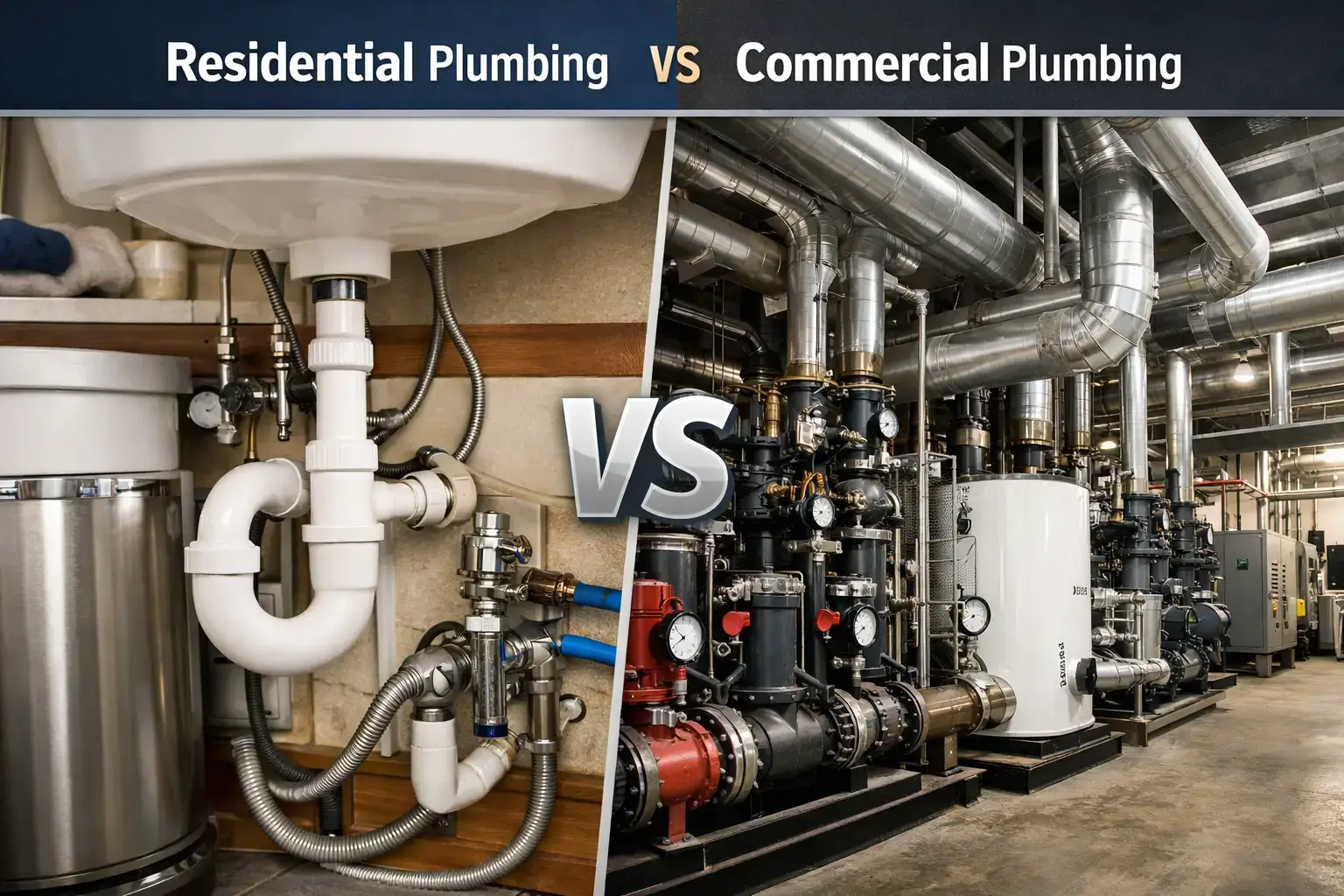
Every building requires plumbing systems, which serve as fundamental components for residential properties, commercial spaces, food establishments, and manufacturing plants. However, many people assume that all plumbing systems are the same. Residential plumbing systems differ from commercial plumbing systems because they use different designs and operate at different scales, require different materials, follow various rules,s and need distinct maintenance procedures.
The identification of different construction elements serves as a vital factor for property owners and builders, and everyone who works in construction or facility management.
What Is Residential Plumbing?
Residential plumbing refers to plumbing systems installed in homes and small residential buildings. These systems are designed to serve a limited number of occupants and usually have simpler layouts.
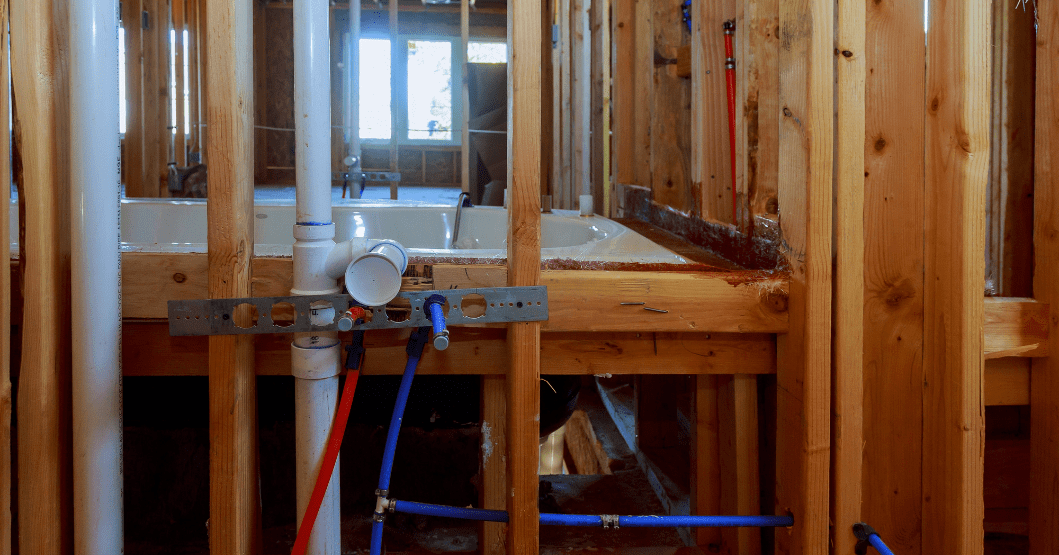
Common Residential Buildings
- Single-family homes
- Apartments
- Condominiums
- Townhouses
Typical Residential Plumbing Features
- Kitchen sinks
- Bathroom fixtures
- Water heaters
- Washing machine connections
- Basic drainage systems
Residential plumbing is usually smaller in scale and less complex than commercial plumbing systems.
What Is Commercial Plumbing?
Commercial plumbing refers to plumbing systems designed for buildings that serve a large number of people or have specialized operational needs.
Common Commercial Buildings
- Office buildings
- Shopping malls
- Hotels
- Restaurants
- Hospitals
- Schools
- Factories
Commercial plumbing systems are larger, more complex, and built to handle heavy daily usage.
Key Differences Between Residential and Commercial Plumbing
1. System Size and Complexity
Residential plumbing systems are relatively simple. They typically serve one household and include a limited number of fixtures.
Commercial plumbing systems, on the other hand:
- Serve dozens or hundreds of users
- Include multiple floors
- Require complex pipe networks
- Use advanced equipment
For example, a commercial building may require:
- Booster pumps
- Large water heaters
- Pressure-regulating systems
2. Usage Demand
Residential plumbing systems are designed for moderate daily use by a small number of people.
Commercial plumbing systems must handle:
- Continuous usage
- High peak demand
- Multiple users at the same time
For instance:
- An office building may have dozens of restrooms
- A restaurant may use large amounts of water for cooking and cleaning
This higher demand requires stronger materials and more robust system designs.
3. Pipe Size and Materials
Residential plumbing usually uses:
- Smaller-diameter pipes
- Standard materials such as PVC, PEX, or copper
Commercial plumbing often requires:
- Larger pipe diameters
- More durable materials
- Industrial-grade components
Commercial systems must withstand:
- Higher pressure
- Constant use
- Heavy loads
4. Building Codes and Regulations
Residential plumbing must follow local building codes, but the requirements are generally less complex.
Commercial plumbing must comply with:
- Strict safety regulations
- Health department codes
- Fire protection requirements
- Accessibility standards
Because of these regulations, commercial plumbing systems often require:
- Professional engineering design
- Detailed inspections
- Special permits
5. Installation and Design Process
Residential plumbing installation is usually straightforward. A plumber can often design and install the system based on standard practices.
Commercial plumbing requires:
- Detailed engineering drawings
- MEP coordination
- System calculations
- Professional approvals
Engineers and contractors must work together to ensure the system meets all requirements.
6. Maintenance Requirements
Residential plumbing maintenance typically involves:
- Fixing leaks
- Unclogging drains
- Replacing fixtures
- Water heater servicing
Commercial plumbing requires:
- Regular inspections
- Preventive maintenance programs
- System monitoring
- Emergency response planning
Because commercial systems serve many people, failures can disrupt business operations and lead to significant losses.
7. Equipment and Fixtures
Residential plumbing systems use standard fixtures such as:
- Household toilets
- Kitchen sinks
- Standard faucets
Commercial plumbing systems use specialized fixtures, including:
- High-capacity toilets and urinals
- Commercial-grade faucets
- Industrial dishwashers
- Grease traps
- Backflow prevention devices
These fixtures are designed for durability and high usage.
8. Water Heating Systems
Residential buildings typically use:
- Small tank water heaters
- Tankless water heaters
- Simple hot water distribution systems
Commercial buildings often require:
- Large centralized water heating systems
- Boilers
- Heat exchangers
- Recirculation systems
These systems are designed to supply hot water to multiple areas simultaneously.
Cost Differences Between Residential and Commercial Plumbing
Residential Plumbing Costs
- Lower material costs
- Simpler installation
- Fewer fixtures
- Shorter project timelines
Commercial Plumbing Costs
- Higher material and equipment costs
- Complex system designs
- More labor and coordination
- Longer project durations
Although commercial plumbing is more expensive, it is necessary to meet the demands of large buildings.
Safety and Compliance Considerations
Commercial plumbing systems must address additional safety concerns, such as:
- Fire suppression systems
- Emergency drainage
- Backflow prevention
- Health and sanitation standards
Residential systems focus mainly on:
- Safe water supply
- Proper drainage
- Leak prevention
Role of Engineers in Commercial Plumbing
Commercial plumbing often requires the involvement of:
- Mechanical engineers
- Plumbing engineers
- MEP consultants
Their responsibilities include:
- System design
- Load calculations
- Code compliance
- Equipment selection
- Construction coordination
This level of engineering is usually not required for standard residential plumbing projects.
Which Plumbing System Is Right for Your Project?
The type of plumbing system depends on:
- Building size
- Occupancy level
- Usage type
- Local regulations
Choose Residential Plumbing for:
- Homes
- Small apartments
- Low-occupancy buildings
Choose Commercial Plumbing for:
- Offices
- Retail spaces
- Hotels
- Restaurants
- Industrial facilities
Conclusion
Residential plumbing systems operate on a smaller scale than commercial systems, and they handle fewer components yet follow different rules and serve different types of customers.
The plumbing system for residential buildings operates with basic elements that serve a restricted number of people. Commercial plumbing systems maintain extensive systems that handle complex operations at high volumes while following all safety rules and building codes.
Property owners and builders need to understand these distinctions because they enable them to find proper plumbing solutions for their construction projects while maintaining effective, secure, and durable systems.