

If you have ever wondered what MEP is in construction, you are not alone. The MEP system functions as an essential part of modern building design and construction, but most people never see its operational elements. The operational success of buildings depends on MEP systems, which provide essential services for lighting and power, water supply, and air conditioning to create safe and comfortable environments.
The article will study construction’s MEP definition together with its essential parts and its value in construction operations, and its position within building development processes, and its influence on modern sustainable buildings, which integrate smart technology.
What Does MEP Stand for in Construction?
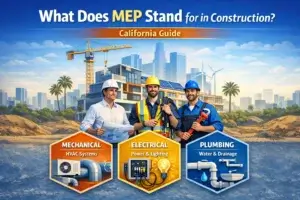
In construction, MEP stands for:
- M – Mechanical
- E – Electrical
- P – Plumbing
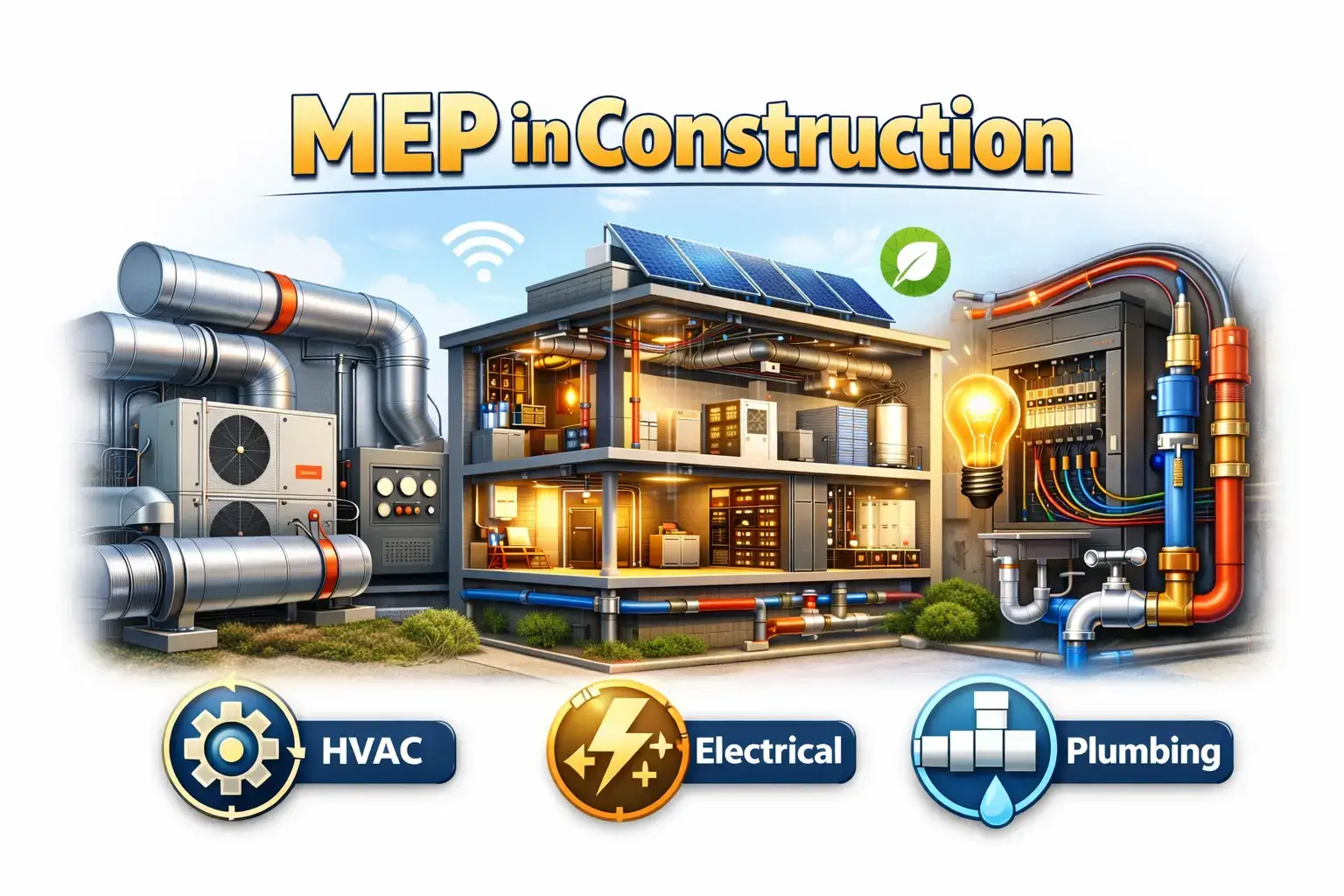
MEP systems include all the mechanical, electrical, and plumbing services that support a building’s daily operations. A building receives its shape and strength from architectural and structural elements, but MEP systems enable the building to function as a living entity.
A building would lack its essential systems because MEP does not exist to provide lighting and water flow, air circulation, and temperature management.
Mechanical Systems in MEP Construction
The mechanical part of MEP systems concentrates on maintaining climate control and air quality while providing thermal comfort to building occupants. These systems protect building occupants through their ability to maintain secure and comfortable indoor settings.
Key Mechanical Systems Include:
- Heating, Ventilation, and Air Conditioning (HVAC)
- Chillers and boilers
- Air handling units (AHUs)
- Ductwork and ventilation systems
- Fire protection systems (smoke control, pressurization)
Mechanical systems operate to control building temperature while they eliminate pollutants, manage humidity levels, and sustain correct ventilation throughout the structure.
Electrical Systems in MEP Construction
The electrical component of MEP covers all power-related systems that allow a building to function efficiently and safely.
Key Electrical Systems Include:
- Power distribution (transformers, switchgear, panels)
- Lighting systems (interior, exterior, emergency lighting)
- Backup power (generators, UPS systems)
- Low-voltage systems (data, telecom, security, fire alarms)
- Grounding and lightning protection
Electrical engineers ensure that power loads are balanced, energy is used efficiently, and safety standards are met.
Plumbing Systems in MEP Construction
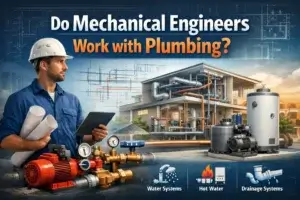
The plumbing component deals with water supply, drainage, and waste management within a building.
Key Plumbing Systems Include:
- Domestic cold and hot water supply
- Sanitary drainage and sewer systems
- Stormwater drainage
- Gas piping systems
- Specialized systems (medical gas, industrial piping)
Plumbing design focuses on hygiene, water efficiency, pressure control, and compliance with local building codes.
Why Is MEP Important in Construction?
Understanding what MEP in construction also means is understanding its importance. MEP systems account for a significant portion of a building’s total cost and operational efficiency.
Importance of MEP Systems:
- Functionality: Enables lighting, water, ventilation, and power
- Occupant Comfort: Maintains temperature, air quality, and convenience
- Safety: Supports fire alarms, emergency lighting, and smoke control
- Energy Efficiency: Reduces energy consumption and operating costs
- Regulatory Compliance: Meets building codes and safety standards
Poorly designed MEP systems can lead to high energy bills, frequent maintenance issues, and uncomfortable indoor environments.
Role of MEP in the Construction Process
MEP systems function as an integrated system which runs through all construction phases instead of being added during the last construction phase.
1. Design Phase
MEP engineers work together with architects and structural engineers to develop building plans which include load analysis and space planning through their use of BIM (Building Information Modeling) software.
2. Coordination Phase
The main objective of MEP coordination involves preventing all ductwork and pipework and cable systems from conflicting with building structure supports. The process needs to reach this stage because it prevents builders from spending extra money on building site corrections.
3. Installation Phase
Contractors follow approved drawings and specifications to install mechanical equipment and electrical systems and plumbing infrastructure throughout their work.
4. Testing and Commissioning
Systems undergo testing and balancing and commissioning processes to achieve their designed operation before the building becomes available for occupancy.
MEP Drawings and BIM in Construction
MEP drawings are technical documents that show the layout and specifications of mechanical, electrical, and plumbing systems. These drawings include:
- HVAC layouts
- Electrical schematics
- Plumbing riser diagrams
- Equipment schedules
Today, many projects use BIM for MEP, which allows all systems to be modeled in 3D. BIM improves coordination, reduces errors, and enhances construction efficiency.
MEP in Different Types of Buildings
MEP systems vary depending on the type of construction project.
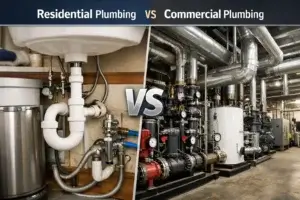
Residential Buildings
Focus on comfort, energy efficiency, and water conservation.
Commercial Buildings
Require complex HVAC, advanced lighting control, and backup power systems.
Industrial Facilities
Include heavy mechanical systems, high-voltage electrical infrastructure, and specialized plumbing.
Healthcare Buildings
Demand highly specialized MEP systems for air filtration, medical gas, and redundancy.
MEP and Sustainable Construction
Sustainability has become a major focus in modern construction, and MEP plays a key role.
Sustainable MEP Strategies Include:
- Energy-efficient HVAC systems
- LED lighting and smart controls
- Water-saving fixtures
- Renewable energy integration (solar, geothermal)
- Building automation systems (BAS)
Efficient MEP design reduces environmental impact while improving long-term operational performance.
Conclusion: What Is MEP in Construction?
So, what is MEP in construction? MEP represents the combination of mechanical systems, electrical systems, and plumbing systems, which enable buildings to operate safely while providing comfort to their occupants. The modern building depends on MEP systems, which create its structural foundation, although these systems remain hidden behind walls and ceilings.
The design and execution of MEP systems for residential homes and commercial and industrial facilities determine how buildings perform through their building efficiency and their ability to maintain occupant health. A well-coordinated MEP system not only enhances comfort and safety but also adds long-term value to any construction project.