When individuals working in building design, construction, or facility management ask, “Are MEP and HVAC the same?” they are typically attempting to comprehend the relationship between building systems. Confusion may arise because the terms are frequently used together and occasionally interchangeably.
The relationship between MEP and HVAC is explained in a clear, expert manner in this article. It explains the definitions of each term, their differences, and how they are used in contemporary American buildings.
Core Question: Are MEP and HVAC the Same?
The quick response to the question, “Are MEP and HVAC the same?” is not. Despite their close relationship, they are not the same.
Several building systems fall under the larger category of MEP. One particular system that is covered by MEP is HVAC. Accurate planning, coordination, and communication in construction and building operations depend on an understanding of this distinction.
What Does MEP Mean?
The acronym for mechanical, electrical, and plumbing is MEP. It refers to the fundamental systems that enable buildings to be safe, functional, and comfortable for their occupants.
Because these systems interact within the same building spaces, they are usually designed and coordinated together. A building’s performance over the course of its lifetime is greatly influenced by its MEP design.
The Mechanical Component of MEP
Systems that regulate indoor environmental conditions are part of the mechanical component of MEP. HVAC systems fall into this category.
Temperature, ventilation, and air quality are all maintained by mechanical systems. They also consist of additional equipment that facilitates building operations.
What Is HVAC?
Heating, ventilation, and air conditioning are referred to as HVAC. It focuses especially on regulating airflow and indoor climate.
Thermal comfort and acceptable indoor air quality are the goals of HVAC systems. In the various climate zones of the United States, they are indispensable in residential, commercial, and industrial buildings.
How HVAC Fits Within MEP
To make the question more clear Is it helpful to view HVAC as a subset of MEP rather than as a distinct discipline? Are MEP and HVAC the same?
In addition to HVAC, MEP also covers plumbing and electrical systems. HVAC frequently interacts with plumbing systems for heating and cooling processes because it cannot function without electrical power.
Key Differences Between MEP and HVAC
While related, MEP and HVAC differ in scope, responsibility, and application.
Systems’ Scope
Power distribution, lighting, water supply, and drainage are just a few of the many building systems covered by MEP.
Only heating, cooling, and ventilation systems are the focus of HVAC.
Design Accountability
In order to prevent system conflicts, MEP design entails coordinating several disciplines.
Thermal loads, airflow, and comfort performance are the main cons Efficientiderations in HVAC design.
Project Role MEP planning guarantees the general functionality of the building.
The quality of the indoor environment is guaranteed by HVAC planning.
Why the Terms Are Often Confused
Are MEP and HVAC the same? is prevalent due to the high visibility and extensive discussion of HVAC systems.
HVAC work makes up a sizable amount of mechanical system design in many projects. Although it is technically incorrect, this prominence may cause people to use HVAC as a shorthand for all MEP systems.
How MEP Systems Work Together
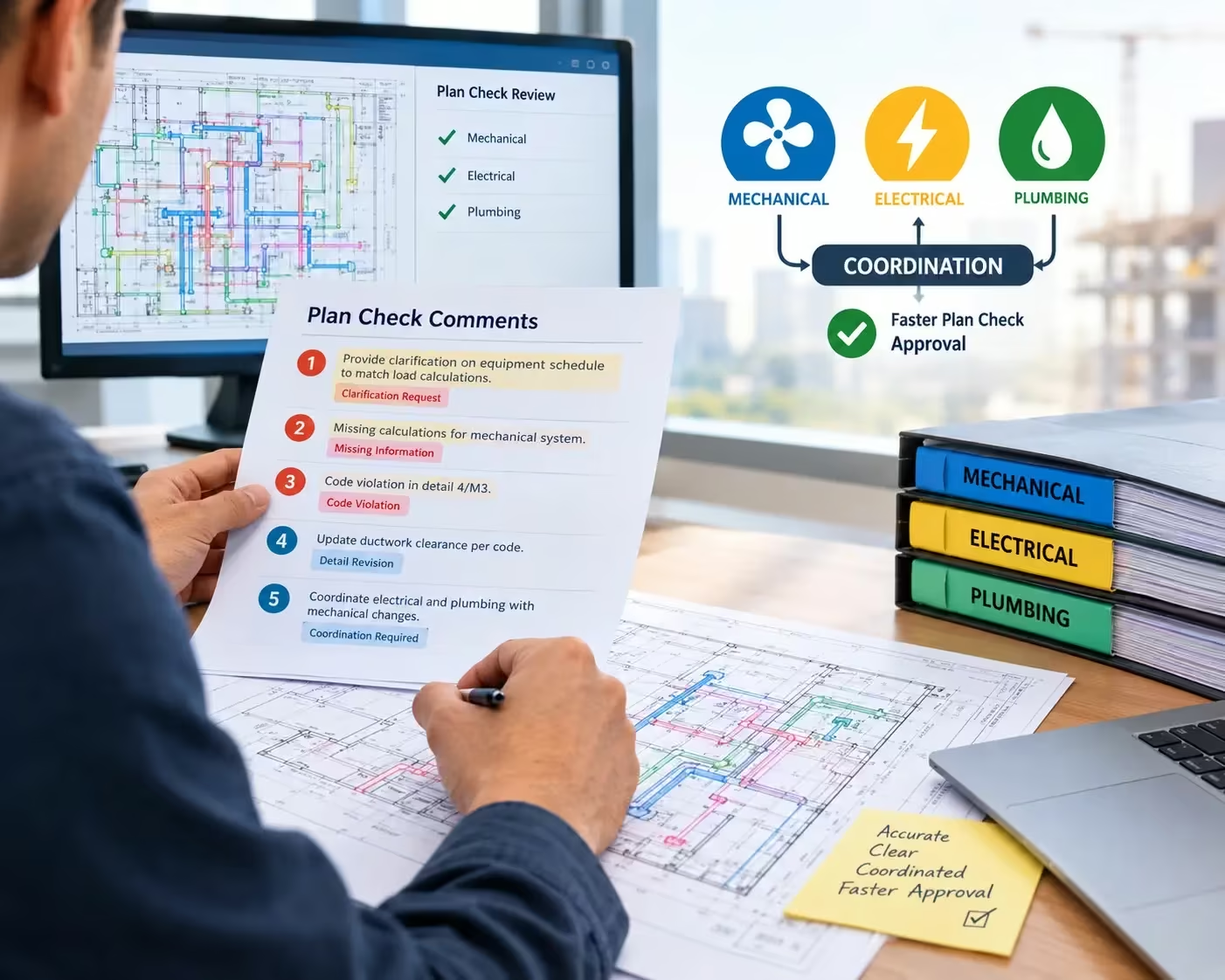
Instead of being separate parts, MEP systems are built as an integrated network.
For instance, electrical power is necessary for HVAC equipment to function. Additionally, it might depend on plumbing systems for condensate drainage, hot water, or chilled water. These systems work well together when there is effective MEP coordination.
Importance of Coordination in Building Design
Construction errors and operational problems are decreased when MEP systems are properly coordinated.
Issues may occur during installation or operation if HVAC systems are designed without taking electrical capacity or plumbing routing into account. By addressing system interactions early on, MEP coordination aids in the prevention of these problems.
The Role of MEP in Building Safety
MEP systems have a direct impact on the health and safety of occupants.
Alarms and emergency lighting are supported by electrical systems. Sanitation and clean water are guaranteed by plumbing systems. Temperature and air quality are controlled by HVAC systems. When combined, these systems support safe building operations and code compliance.
HVAC and Energy Efficiency
A building’s HVAC systems frequently use the most energy.
HVAC, electrical, and plumbing efficiency are all assessed within the MEP framework. Energy-saving techniques like optimal equipment selection and system controls are supported by integrated MEP design.
Professional Roles and Specialization
People also wonder if MEP and HVAC are the same. is connected to duties and job titles.
While some experts work with all MEP systems, others focus on HVAC design. Larger projects frequently call for different experts working together under a coordinated MEP approach.
Regulatory and Code Considerations
MEP systems are treated as separate but related disciplines under US building codes.
Thermal comfort and ventilation rates are covered by HVAC codes. Plumbing and electrical codes cover sanitation, capacity, and safety. MEP coordination guarantees adherence to all relevant regulations.
MEP vs HVAC in Construction Documentation
MEP systems are frequently divided into distinct plans in construction drawings.
Ductwork, equipment, and controls are the main topics of HVAC drawings. Plumbing and electrical drawings deal with different systems. The entire MEP package is made up of these documents.
Why Accurate Terminology Matters
Communication between project stakeholders is enhanced when appropriate terminology is used.
Expectations become clearer once everyone is aware that HVAC is a component of MEP. This clarity facilitates improved budgeting, scheduling, and teamwork throughout a project.
Common Misconceptions Clarified
The idea that HVAC encompasses all building systems is a common misconception.
Reiterating the query: Are HVAC and MEP the same? aids in clearing up this misunderstanding. Although HVAC is a crucial system, MEP encompasses more.
Practical Examples in Real Buildings
HVAC controls air quality and temperature in an office building. Lighting and equipment are powered by electrical systems. Plumbing systems handle waste and provide water.
Only one of these is HVAC, but all of them are MEP systems.
Conclusion
So, are HVAC and MEP the same thing? Clearly, the answer is no. HVAC is one particular part of the mechanical part of MEP, which is a broad category that includes plumbing, electrical, and mechanical systems.
Gaining an understanding of this distinction promotes better building design and operation, enhances communication, and clarifies roles. It is simpler to understand how contemporary buildings operate as integrated systems when HVAC is seen as a component of a broader MEP framework.