The design process of high-end custom homes, commercial tenant improvements, and ADU construction projects faces strict regulatory requirements that affect their HVAC system development.
In California, selecting an off-the-shelf AC unit together with a simple duct design does not meet the required standards. The building department personnel from local authorities examine HVAC plans to confirm that these documents meet the established energy performance requirements, air quality standards, and safety codes.
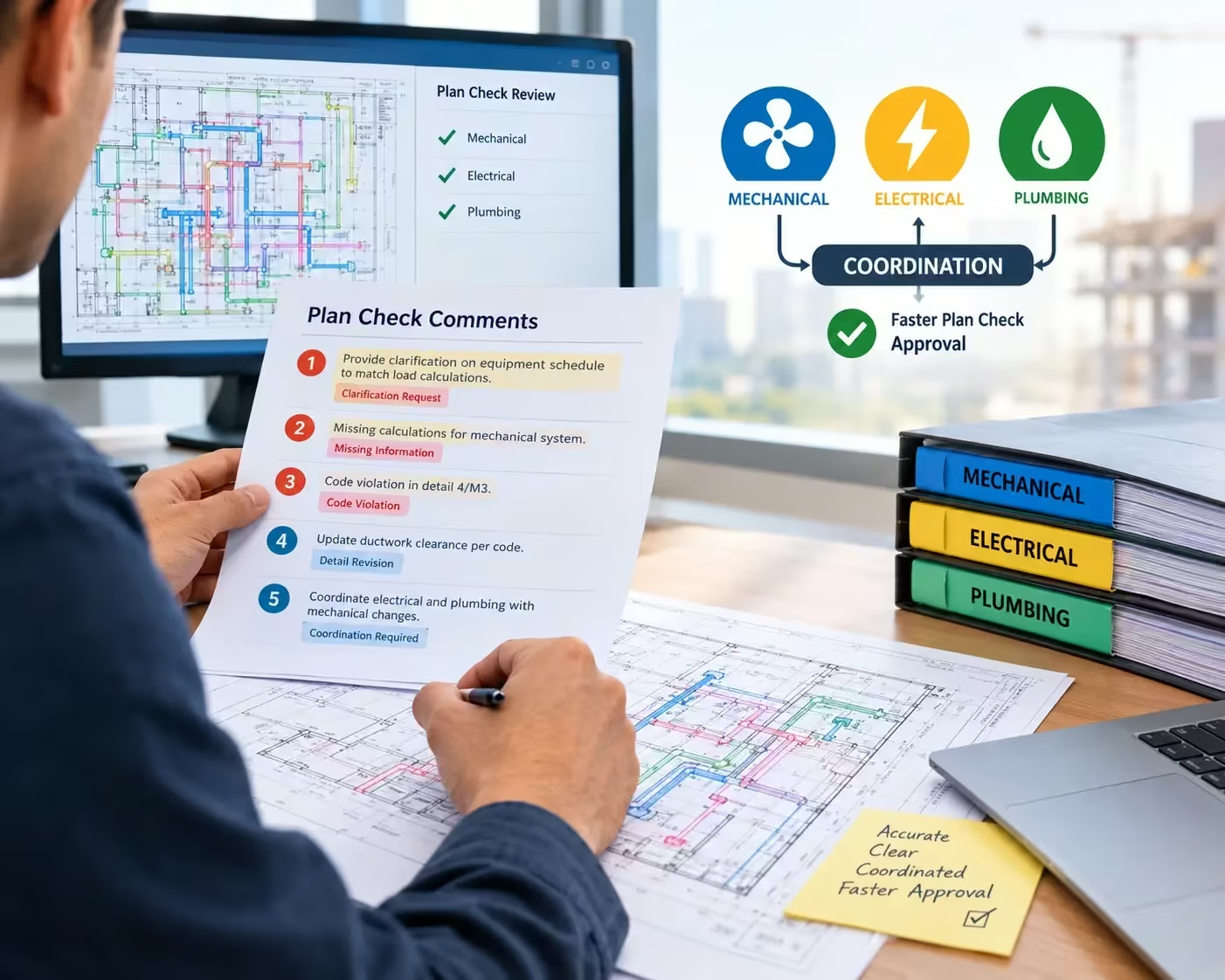
The building permit process will face delays because your engineering drawings do not contain the essential calculations and layouts that plan checkers need to perform their evaluations. Here is a breakdown of the core HVAC requirements needed to secure building permit approval in California.
1. Title 24 Energy Compliance Documentation
The mechanical design process operates as a unified system with California’s Energy Code which appears in Title 24 Part 6. The first step in plan checking requires approval of physical duct layouts before the process of energy compliance calculation review begins.
The HVAC system requires all components to reach established performance levels through achieving specific minimum SEER2 ratings for cooling and HSPF2 ratings for heat pump operation.
- The Submittal Requirement: Signed NRCC-MCH forms for commercial projects or CF1R forms for residential projects must be embedded directly into your drawing set. These forms prove that your proposed HVAC equipment load mathematically matches your building envelope’s energy budget.
2. Load Calculations (ACCAs or ASHRAE)
The plan checkers need proof of your HVAC system correct sizing before they start their work. The system operates inefficiently when it runs with too much power because it needs to restart frequently yet it fails to maintain proper temperature control.
- Residential (Manual J, S, & D): The state of California requires all jurisdictions to follow Air Conditioning Contractors of America (ACCA) standard calculation methods for residential properties and ADUs. You must provide a Manual J (heating and cooling load calculations based on climate, insulation, and windows), a Manual S (equipment selection verification), and a Manual D (duct system design).
- Commercial (ASHRAE Standards): The commercial submission process needs formal heat loss and heat gain calculations which must follow ASHRAE standards for peak occupancy loads and equipment heat output and ventilation requirements.
3. Indoor Air Quality & Ventilation Rates
Modern building design now features highly sealed envelopes which function to reduce energy consumption. The building departments now require mechanical ventilation systems because they strongly believe these systems will defend indoor air quality.
Your mechanical drawings need to show the exact locations where fresh air enters the system and where the system releases its stale air.
- The ASHRAE 62.2 standard for residential buildings requires mechanical ventilation systems which can operate continuously or at specific intervals through whole-house exhaust fans or Energy Recovery Ventilators that produce minimal noise.
- The ASHRAE 62.1 standard for commercial buildings requires building owners to calculate their specific outdoor air intake needs by using specific formulas which depend on their building function (e.g., retail spaces need different fresh air volumes than medical clinics and restaurant kitchens).
4. Complete Mechanical Layout & Details
A conceptual diagram will not pass plan check. The building department requires a fully detailed mechanical plan view drawn to scale.
Your construction documents must explicitly illustrate:
- The equipment schedules need to contain full tables that show manufacturers with their model numbers and all condenser units, air handlers, and exhaust fans, and their heating and cooling abilities, electrical needs, and operational efficiency data.
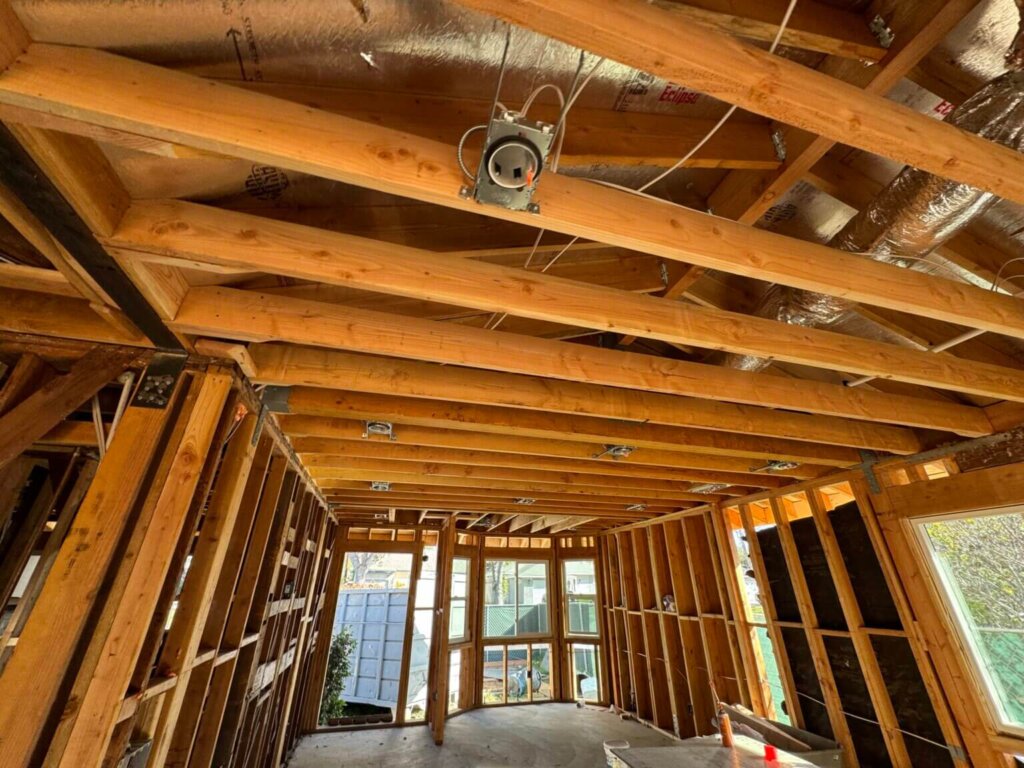
- The duct routing and sizing system needs to show specific paths for ducts together with their dimensions (10″ round and 12×8 rectangular) and their construction materials and their thermal insulation properties.
- The supply registers and return grilles need to be placed at specific locations, which also show the target airflow volume in cubic feet per minute for each space.
- The drawings for commercial buildings and multi-family residential properties need to display duct openings through fire-protected walls and show all dampers that fulfill building code requirements.
Complete HVAC Submittal Checklist
Ensure your engineering team has finalized these components before submitting your package to the city:
| Requirement Block | Key Deliverable | Why Plan Checkers Flags It |
| Energy Modeling | Title 24 Compliance Forms | Equipment model numbers on the plans don’t match the energy forms. |
| Sizing Math | Manual J/S/D or ASHRAE Calc Sheets | The system tonnage is guessed rather than calculated from building data. |
| Duct Layout | Dimensioned Plan Views | Lack of clear sizing or structural clearances for duct runs. |
| Air Balance | CFM Schedules per Space | Total supply airflow does not match the outside air ventilation requirements. |
Streamline Your Mechanical Submittals
At YA Creative Design Partners we develop HVAC systems through a collaborative design process which includes multiple team members. Our team manages Structural and MEP and Title 24 engineering services through complete in-house production which allows us to position your mechanical equipment inside structural frameworks while maintaining energy compliance budget alignment from the start.
Our team will help you get your building permit with no need for multiple correction cycles. The Irvine office will provide you with a detailed fee proposal which they will deliver within 24 hours after you reach out to them.