The design of stormwater drainage systems serves as a vital defense structure which protects residential areas, commercial spaces, public roads, and community areas from water damage and flooding problems. The development process for new construction projects and existing site upgrades requires developers to understand stormwater management systems because they need to build sustainable properties which follow environmental rules and protect their locations.
The guide provides all necessary information about Stormwater Drainage Design Explained which includes fundamental design principles and system elements and their advantages and typical obstacles, and the importance of experienced civil engineers for effective stormwater management.
What Is Stormwater Drainage Design?
Stormwater drainage design requires engineers to plan and develop systems which gather and manage rainwater runoff for secure discharge. Water runs across roofs, parking areas, sidewalks, and streets during heavy rain instead of allowing it to penetrate the soil. The lack of a well-designed drainage system will create flooding problems that damage foundations and cause erosion while spreading pollution to water bodies near the area.
Professional drainage design balances hydraulic performance with environmental responsibility while meeting local, state, and federal regulations.
Professional drainage design balances hydraulic performance with environmental responsibility while meeting local, state, and federal regulations.
Why Stormwater Drainage Design Is Important
A stormwater drainage system which receives proper design work moves water off properties but it performs additional functions. The system safeguards infrastructure while it lowers maintenance expenses and protects the surrounding natural environments.
Key benefits include:
- Reduces flooding during heavy rain events
- Protects buildings, roads, and utilities
- Prevents soil erosion and slope instability
- Improves public safety
- Reduces pollutants entering rivers and streams
- Supports sustainable site development
- Helps projects comply with municipal drainage regulations
Investing in proper drainage planning early in a project often prevents costly repairs and legal issues later.
How Stormwater Drainage Systems Work
An effective stormwater drainage system collects runoff and directs it through engineered infrastructure before safely releasing or storing the water.
Typical system components include:
Surface Drainage
Surface grading directs rainwater toward collection points instead of allowing it to pool around structures. The common drainage systems include swales and gutters and channels and catch basins for water management.
Underground Drainage Pipes
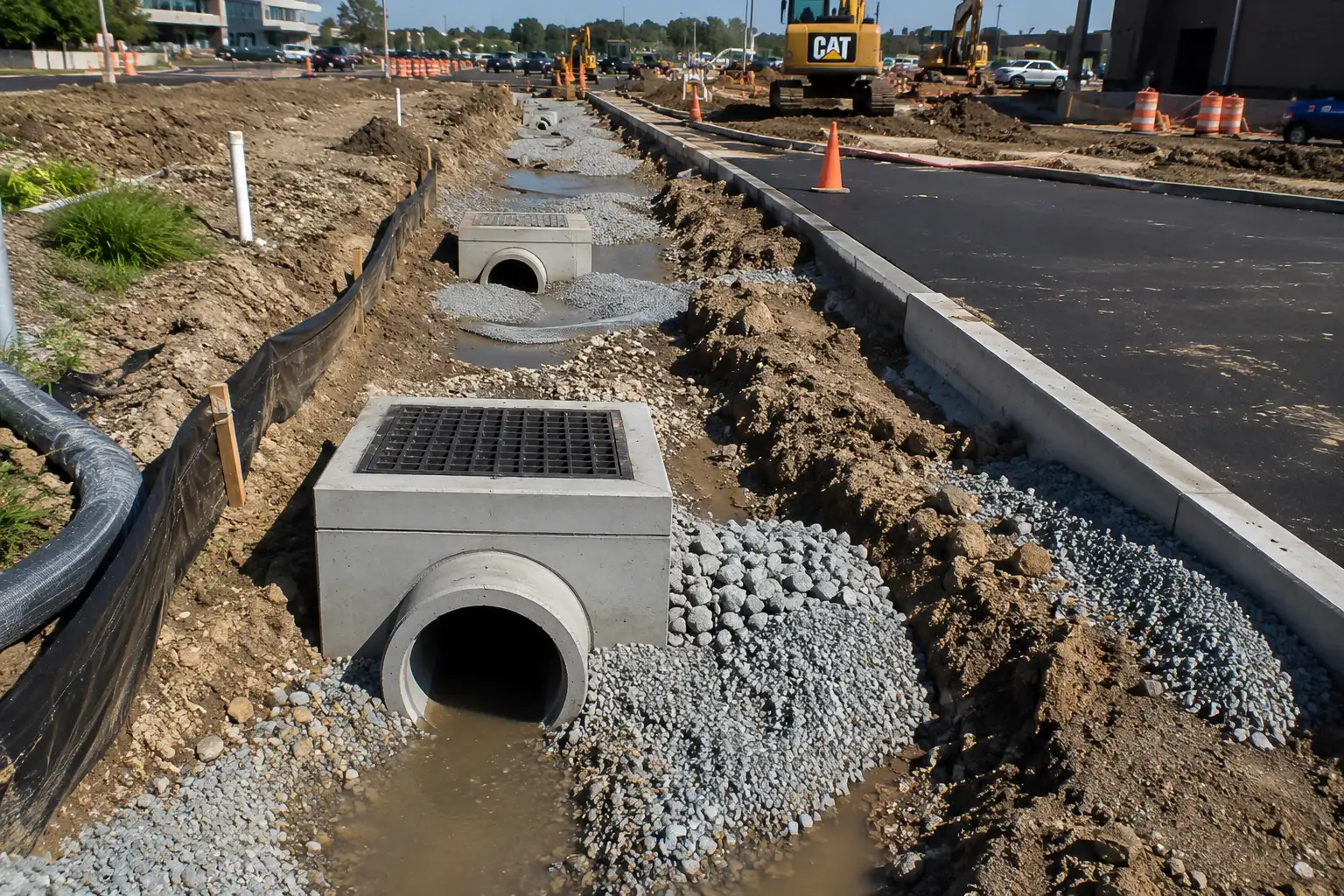
The stormwater pipes carry collected runoff through buried pipe systems which lead to detention basins and retention ponds and city storm sewer networks.
Catch Basins and Inlets
The water storage function of catch basins enables them to capture sediment and debris which would otherwise cause blockages in drainage pipes.
Detention and Retention Basins
These engineered basins temporarily store stormwater to reduce peak runoff rates and minimize downstream flooding.
- Detention basins slowly release stored water.
- Retention basins permanently hold water while encouraging infiltration and improving water quality.
Green Infrastructure
Modern stormwater management often incorporates sustainable features such as:
- Bioswales
- Rain gardens
- Permeable pavement
- Green roofs
- Infiltration trenches
- Vegetated filter strips
These solutions reduce runoff while promoting groundwater recharge and improving environmental performance.
Stormwater Drainage Design Explained: The Design Process
Creating an efficient drainage system requires careful planning and engineering analysis.
Site Assessment
Engineers evaluate:
- Existing topography
- Soil characteristics
- Drainage patterns
- Flood-prone areas
- Utility locations
- Nearby waterways
Understanding site conditions forms the foundation of every successful design.
Hydrologic Analysis
Hydrologic calculations estimate how much runoff a site will generate during different rainfall events.
Engineers analyze:
- Rainfall intensity
- Watershed size
- Impervious surface area
- Soil infiltration rates
- Climate data
This information determines the required capacity of drainage infrastructure.
Hydraulic Design
The hydraulic analysis process enables water to move efficiently through piping systems and channel structures and detention facilities which prevents water from backing up and flooding the area.
The system needs correct pipe dimensions together with accurate slope measurements to operate at its best.
Regulatory Compliance
Stormwater drainage projects must meet local drainage ordinances, environmental regulations, and permitting requirements.
Compliance often includes:
- Water quality management
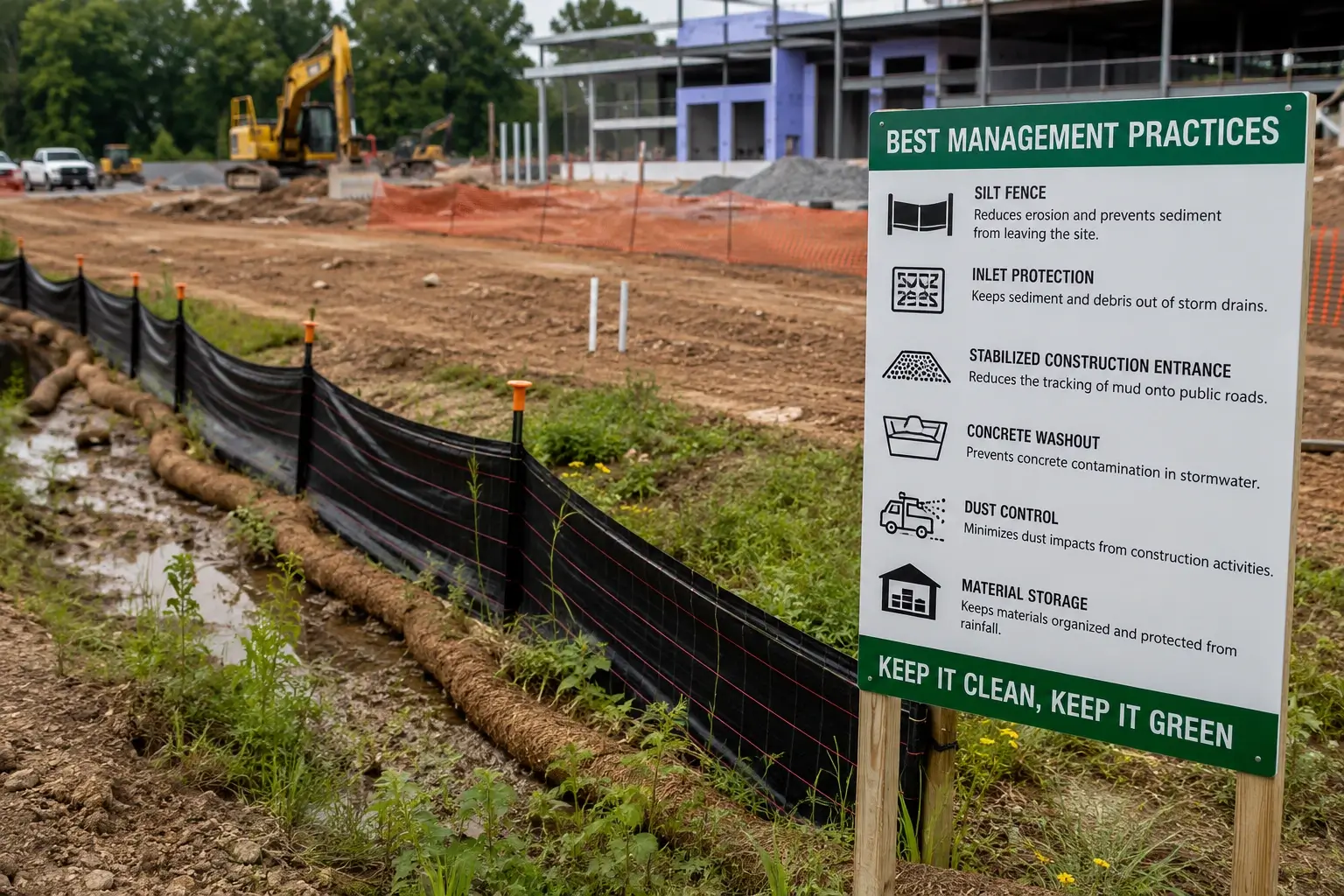
- Erosion control
- Sediment control
- Flood mitigation
- Stormwater detention requirements
Experienced engineering professionals help streamline the approval process while reducing project delays.
Common Challenges in Stormwater Drainage Design
Every project presents unique drainage challenges.
Some of the most common include:
Increasing Urban Development
As cities expand, natural landscapes are replaced by pavement and buildings, increasing runoff volume and reducing infiltration.
Climate Change
More frequent and intense storms require drainage systems capable of handling larger rainfall events than older infrastructure was designed for.
Limited Site Space
Urban developments often have limited room for detention basins or large drainage facilities, requiring innovative engineering solutions.
Aging Infrastructure
Older stormwater systems may no longer meet modern design standards and often require upgrades to improve capacity and reliability.
Best Practices for Effective Stormwater Management
Successful stormwater drainage design combines traditional engineering with sustainable practices.
Best practices include:
- Designing for future development
- Using low-impact development (LID) strategies
- Minimizing impervious surfaces
- Maintaining drainage systems regularly
- Protecting natural waterways
- Incorporating green infrastructure whenever possible
- Performing routine inspections and maintenance
These strategies improve long-term system performance while reducing environmental impacts.
Why Professional Stormwater Drainage Design Matters
Stormwater drainage systems need more than pipe installation and land grading because they require extensive design work to become operational. Organizations need to perform detailed engineering computations and environmental evaluations and regulatory assessments because every location contains specific conditions which need special attention.
Working with experienced civil engineers provides several advantages:
- Accurate hydraulic modeling
- Optimized drainage layouts
- Regulatory compliance
- Cost-effective construction solutions
- Reduced flood risk
- Improved environmental sustainability
- Long-term infrastructure performance
Professional engineering also helps avoid expensive redesigns, permitting issues, and construction delays.
Sustainable Stormwater Drainage for Modern Developments
Today’s projects increasingly emphasize sustainability alongside functionality.
Modern stormwater drainage systems are designed to:
- Reduce runoff volumes
- Improve water quality
- Protect aquatic habitats
- Recharge groundwater
- Lower maintenance costs
- Increase community resilience against severe weather
By combining engineered infrastructure with natural stormwater management techniques, developers can create safer, more environmentally responsible projects that meet today’s evolving standards.
Frequently Asked Questions
1. What is stormwater drainage design?
The engineering process of stormwater drainage design collects and manages water runoff from rainfall to protect buildings and infrastructure through controlled water discharge which prevents flooding and erosion and water contamination.
2. Why is stormwater management important?
The correct management of stormwater prevents flooding while defending buildings and their properties and it enhances water purity and stops soil erosion and maintains adherence to environmental standards.
3. What is the difference between detention and retention basins?
Stormwater detention basins function as temporary storage facilities which release water at a slow pace after rainstorms but retention basins function as permanent water storage systems which enable water to naturally seep into the ground while they enhance water quality.
4. How do civil engineers design stormwater drainage systems?
Civil engineers develop stormwater management systems through their analysis of rainfall data and site topography and soil conditions and drainage patterns and hydraulic performance to create systems which follow building codes and achieve operational efficiency.
5. How often should stormwater drainage systems be inspected?
At least once per year and following severe storm events all drainage systems require inspection. The regular maintenance activities function to stop system blockages and prevent flooding and sediment accumulation which leads to expensive repair costs.
Conclusion
Stormwater Drainage Design Explained education serves as a vital need for all professionals who work with land development, commercial construction and infrastructure planning projects. The correct design of drainage systems protects properties while handling water runoff effectively and stops flood occurrences and promotes environmental health.
Professional stormwater drainage design serves as an investment which benefits residential subdivision and commercial development and public infrastructure projects through improved system longevity and better regulatory compliance and reduced expenses. The combination of strategic planning with contemporary engineering approaches will create an effective stormwater management system which protects human communities and natural ecosystems for an extended period.