
WQMP and LID plans.
Post-construction stormwater quality plans for new development and redevelopment: WQMP, LID plans and SWQMP, prepared with the grading and drainage design.
4.8 from 19 Google reviewsOne requirement, a different name in each county.
Southern California agencies require new development and redevelopment to treat and retain stormwater on the site after construction. The requirement comes from the regional stormwater permits. Orange, Riverside and San Bernardino counties call the document a Water Quality Management Plan. Los Angeles agencies call it a Low Impact Development plan. San Diego agencies call it a Storm Water Quality Management Plan.
The document affects the site layout, because planters, basins and permeable paving need room and suitable soil. We prepare it with the grading and drainage plan, so the treatment measures on the plan match the calculations in the report.
Our office is in Irvine. Civil engineering is available throughout California and in Nevada and Montana. Our team travels to the site when the project needs it.
- Project category and requirement determination
- Drainage management area map
- Treatment measure selection and sizing
- Hydromodification and flow control calculations, where required
- Operation and maintenance plan
- Plan check responses on our scope
"I can confidently recommend them."
What we prepare, by county.
Orange, Riverside and San Bernardino
- Preliminary WQMP for entitlement
- Final WQMP for the grading permit
- Sizing to the county technical guidance
- Infiltration feasibility with the soils report
Los Angeles County
- LID plans for the city or the county
- Capture and treatment volume calculations
- Planter, drywell and permeable paving details
- Small residential LID submittals
San Diego County
- Storm Water Quality Management Plan
- Pollutant control and flow control measures
- Standard project requirements
- Maintenance agreement exhibits
Projects that need a stormwater quality plan.
New development
Homes, apartments and commercial buildings on vacant lots.
Redevelopment
Projects that add or replace impervious surface on a developed site.
Parking lots and site improvements
Paving projects large enough to trigger treatment.
What to send for a proposal.
We review the scope and reply with a written fee proposal and schedule.
Request a proposal- Project address or parcel number
- Site plan or survey, if available
- Scope: grading, drainage, utilities, mapping or stormwater
- Soils report, if one exists
- Target submittal date
WQMP and LID plans FAQ.
What is a WQMP?
A Water Quality Management Plan. It shows how a project will treat and retain stormwater on the site after construction, and who will maintain the measures.
Have you prepared a WQMP for an industrial site?
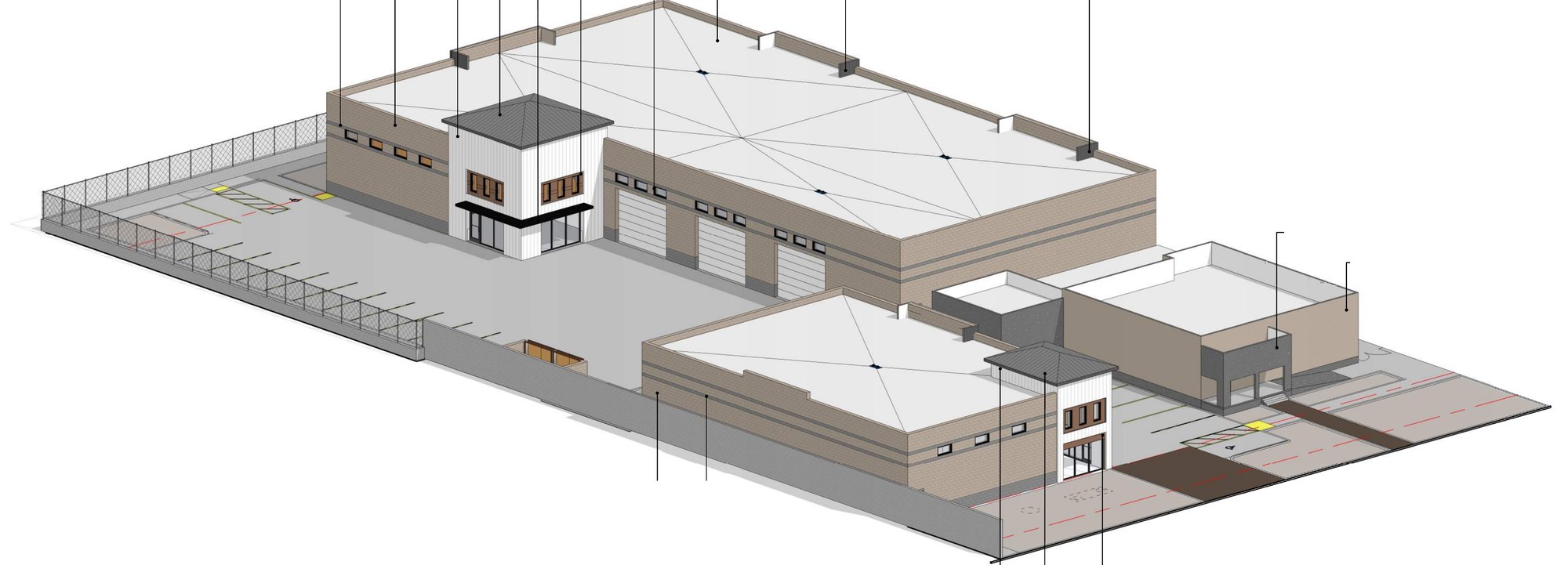
Yes. For a two-building industrial development in Rialto we prepared the final WQMP together with the drainage study, the precise grading plan and the off-site improvement plans.
Is a WQMP the same as a SWPPP?
No. A SWPPP covers stormwater during construction. A WQMP, LID plan or SWQMP covers the finished project for as long as it operates.
Does my project need one?
It depends on the project type, the amount of impervious surface created or replaced and the agency. Each permit region sets its own thresholds. We review the project against them before we quote.
When should the WQMP start?
With the site plan. Treatment measures take space, and infiltration depends on the soils report. Starting after the layout is fixed is a common cause of redesign.
Who maintains the treatment measures?
The property owner. Agencies commonly require a recorded maintenance agreement or covenant.
Civil work.
Ready to send the plans?
Share the drawings and the project address. Fee and schedule are quoted per project after review.