An ADU built in California has to show compliance with Title 24, Part 6, the Energy Code. What applies depends on the type: a new detached ADU is treated as a newly constructed single-family building, an attached ADU or a garage conversion is treated as an addition, and an ADU carved out of space that is already conditioned is treated as an alteration.
This guide sorts the requirements by ADU type, covers solar, and lists what the permit set needs. It follows the California Energy Commission's guidance for the 2025 Energy Code, which applies to building permit applications submitted on or after January 1, 2026. Checked on November 23, 2026.
First, which kind of ADU is it?
| ADU type | How the Energy Code treats it | Solar panels |
|---|---|---|
| New detached ADU | Newly constructed. It meets the requirements for a new single-family building. | Required under the prescriptive path, unless an exception applies. |
| Attached ADU, sharing a wall, floor or ceiling with another dwelling | Addition. | Not required. |
| Garage or other unconditioned space converted to living space, attached or detached | Addition, because unconditioned space becomes conditioned space. | Not required. |
| Existing conditioned space, such as a basement or pool house, converted to an ADU or JADU | Alteration. No floor area is added. The rules apply to the components that are altered. | Not required. |
| JADU: no more than 500 square feet, entirely within a single-family building | Follows the building it is in: part of a new building, or an addition or alteration to an existing one. | Follows the building. |
The sorting matters because the three categories carry different rules, and because the solar requirement attaches only to newly constructed buildings.
Solar on a new detached ADU
- New modules are needed. The Energy Commission's guidance is that a newly constructed detached ADU needs newly installed solar to meet the prescriptive requirements of Section 150.1(c)14, unless an exception applies. An existing system on the main house cannot satisfy it alone.
- Adding to an existing system is allowed. New modules can be added to an existing system on the same lot, if the load-serving entity allows the expansion.
- The meter is not specified. The Energy Code does not say whether the modules have to serve the ADU's meter or the main house meter.
- Solar-ready does not apply. The solar-ready requirements do not apply to a newly constructed ADU built on an existing lot.
Other requirements for a new detached ADU
- Battery-ready. The battery energy storage readiness requirements of Section 150.0(s) apply, unless the electrical service is 125 amperes or less.
- Electric-ready. Where gas is used for water heating, space heating, cooking or clothes drying, the electric-ready requirements apply.
- Ventilation. The dwelling unit ventilation requirements of Section 150.0(o) apply to every newly constructed dwelling unit, whatever its size.
- Water heating. A unit of 500 square feet or less may use an electric water heater with point-of-use distribution under an exception in the prescriptive requirements.
- Heating and cooling. Mini-split and multi-split heat pumps are allowed. Field verification may apply to them.
Additions: attached ADUs and garage conversions
An addition follows Section 150.2(a). The Energy Commission's guidance gives several size breaks that help small units:
- 300 square feet or less. Exempt from the cool roof requirements.
- 500 square feet or less. The electric water heater option above is available.
- 700 square feet or less. Quality insulation installation is not required.
- Walls. R-21 insulation in 2x6 walls is allowed under the prescriptive path, without continuous insulation.
- Lighting. There is no size exception. The lighting requirements of Section 150.0(k) apply.
One mechanical point comes up on attached units: the Energy Commission notes that the ducts of an existing furnace with a central return cannot be extended to serve an attached ADU, because the California Mechanical Code prohibits it. Plan on a separate system for the ADU.
Conversions that were built without a permit
Work done earlier without a permit has to meet the Energy Code requirements that apply when the permit is applied for. The building department decides whether it is treated as new construction or as an addition.
Factory-built and manufactured units
Factory-built housing has to comply with the Energy Code. A manufactured home that carries a HUD label follows Title 25 and is not subject to it.
What goes in the permit set
- The certificate of compliance. For a single-family project this is the CF1R. It shows that the design complies, and the installer's forms refer back to it.
- Prescriptive or performance. The prescriptive path follows the code's fixed list of measures. The performance path models the unit in approved software and trades one measure against another.
- Field verification. Some measures are verified in the field by an ECC rater, the role previously called a HERS rater. Range hood airflow and sound ratings are one example.
- Matching drawings. The windows, insulation, water heater and heating and cooling equipment on the plans have to match the certificate.
An example from our projects
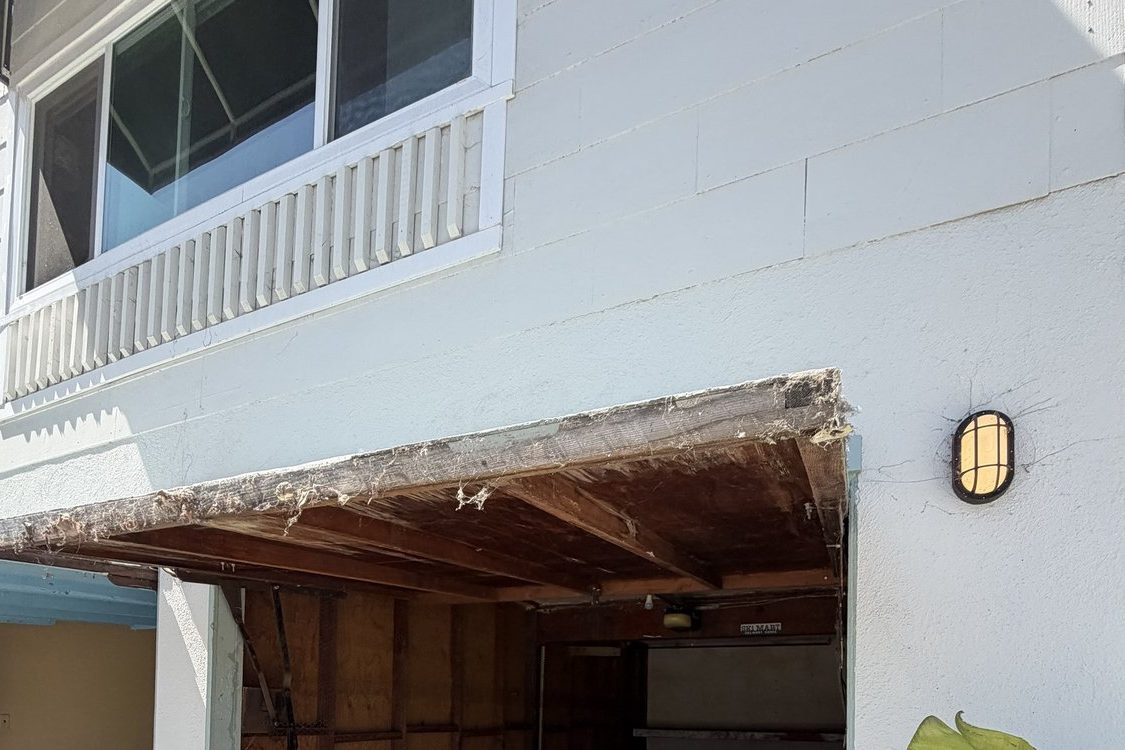
For a garage conversion ADU in Seal Beach, a field assessment of the garage and the floor framing above it came first, and the mechanical, electrical and plumbing design for the new unit followed. A garage conversion of this kind is an addition under the Energy Code, because the garage becomes conditioned space.
Common questions
Does an ADU need a Title 24 report?
Yes. New, added and altered dwelling space has to show compliance with the Energy Code, and the certificate of compliance is part of the permit submittal.
Do ADUs need solar panels in California?
A newly constructed detached ADU does under the prescriptive path, unless an exception applies. An attached ADU or a conversion is an addition or alteration and does not.
Can the solar panels on my house count for the ADU?
Not alone. New modules are needed, and they can be added to the existing system on the same lot if the load-serving entity allows it.
Is a garage conversion an addition or an alteration?
An addition, because unconditioned space becomes conditioned space.
Does a JADU need solar?
A JADU inside an existing house is an addition or alteration, and solar is not required for those.
Which Energy Code applies?
The 2025 Energy Code applies to permit applications submitted on or after January 1, 2026.
How we help
We prepare the Title 24 compliance documents for ADUs together with the structural and MEP engineering, so the certificate and the drawings agree. We prepare the compliance forms. Field verification is done by an ECC rater and is not part of our scope. Related reading: ADU grading and drainage plans.
Sources
Checked November 23, 2026. This article is general information, not advice for a specific project. Requirements change over time, and local ordinances can add to them, so confirm them with the building department that will review your plans.